







More Than a Moonshot
For most Americans, India’s space ambitions rocketed into view in August 2023 when the Chandrayaan-3 mission successfully touched down near the lunar south pole—a treacherous, unexplored region where no other country had landed before. The mission’s cost,
a reported $75 million, was less than the budget for the movie *Gravity*. This wasn't a fluke; it was the signature of the Indian Space Research Organisation (ISRO). For decades, ISRO has been the backbone of the nation’s space program, mastering what’s known as “frugal innovation.” It has methodically built a world-class reputation by launching satellites, developing rockets, and executing complex interplanetary missions on shoestring budgets. While NASA operates with tens of billions, ISRO has consistently delivered impressive results with a fraction of the funding, proving that ingenuity can be as powerful as immense capital. The moon landing was simply the moment the world was forced to pay attention to a capability that had been developing for over half a century.
The Private Sector Is Unleashed
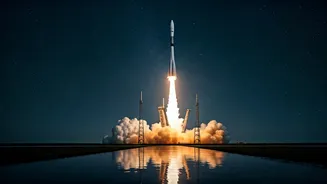
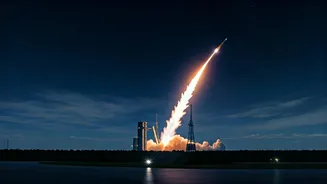
The real story behind India’s current takeoff, however, isn’t just about its state-run agency. The crucial shift happened around 2020, when the Indian government made a pivotal decision to open the space sector to private companies. Before this, ISRO did everything from building rockets to managing missions. Now, a new policy framework, facilitated by a new agency called IN-SPACe, actively encourages startups to build, launch, and operate their own space technology. The floodgates have opened. In late 2022, Skyroot Aerospace, a Hyderabad-based startup, became the first private Indian company to launch a rocket into space. Others, like Agnikul Cosmos, are developing 3D-printed rocket engines, and satellite-imaging company Pixxel is building one of the world's most advanced constellations of hyperspectral Earth-imaging satellites. These aren’t just small-time players; they are attracting serious venture capital and poaching top talent, creating a vibrant, competitive landscape that simply didn't exist five years ago. This public-private partnership allows ISRO to focus on deep-space exploration and scientific research while the private sector innovates and commercializes space services.
A 'Space-Tech' Gold Rush
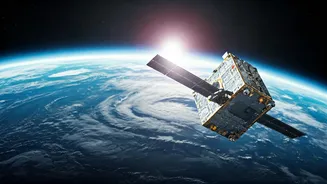
Money follows opportunity, and right now, global investors see a gold rush in India’s space-tech scene. The country is now home to over 150 space-tech startups, a number that has grown exponentially in just a few years. They are building everything from satellite launch vehicles and ground station services to satellite-based data analytics for agriculture and climate monitoring. The appeal is twofold. First, they can leverage India's legacy of low-cost, high-tech engineering. Second, they are targeting a massive global market. The Indian government has set an ambitious goal to increase its share of the global space economy from about 2% today to 9% by 2030, which would value its domestic industry at over $40 billion. This combination of government support, a surge in private innovation, and significant investment is creating a self-reinforcing cycle of growth, turning India into one of the world's most exciting hubs for space entrepreneurship.
A New Orbit in Global Power
So what does this mean for the United States? For one, India is no longer just a developing nation with a niche space program; it's a major, multifaceted player. On one hand, it’s a competitor. India’s low-cost launch services are an increasingly attractive option for satellite companies around the world, challenging the market dominance of American and European providers. On the other hand, and perhaps more importantly, India is becoming an indispensable partner. The U.S. and India are already collaborating on major projects, like the NISAR satellite, a joint Earth-observing mission between NASA and ISRO. As the U.S. looks to build coalitions to counter China’s ambitions in space, a democratic India with proven, cost-effective space capabilities is an ideal strategic ally. India's rise offers the U.S. a partner for scientific discovery, a collaborator in setting norms for behavior in space, and a key node in a global network of space-faring democracies.