




The Era of the Expensive Experiment
Remember the first wave of smart home tech? It often involved complicated hubs, proprietary apps that rarely worked together, and a price tag that made most of us balk. A simple starter kit of color-changing bulbs could easily set you back several hundred
dollars. Installation felt like a project for an IT professional, not the average homeowner. The promise was there—voice-controlled lights! automated schedules!—but the reality was often a frustrating exercise in troubleshooting. For most, it was an expensive novelty, a fun party trick to show off a purple living room, but hardly a justifiable everyday expense. It was firmly in the 'luxury' category: cool if you could afford the cost and the hassle, but completely unnecessary for everyone else.
What Changed? The Three Big Shifts
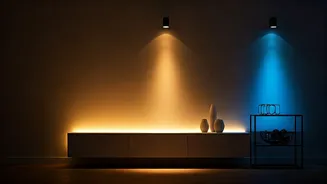
The transition from luxury to lifestyle didn't happen overnight. It was driven by three key developments that dismantled the old barriers. First, prices plummeted. Brands like Wyze, Sengled, and Govee entered the market with reliable, single-digit-priced bulbs that worked right out of the box, no expensive hub required. This put smart lighting within reach of renters and budget-conscious homeowners. Second, setup became radically simpler. The ubiquity of voice assistants like Alexa and Google Assistant meant you no longer needed a dozen different apps. You could control everything with a simple voice command. More recently, the arrival of Matter—a universal connectivity standard backed by Apple, Google, and Amazon—is finally breaking down the walls between brands, promising a future where any device can talk to any other. Finally, the ecosystem expanded beyond the bulb. We now have smart light strips for under-cabinet ambiance, outdoor floodlights for security, and artistic wall panels like those from Nanoleaf that turn light into decor.
Beyond the Party Trick: Wellness and Routine
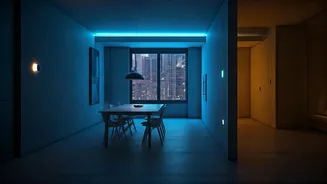
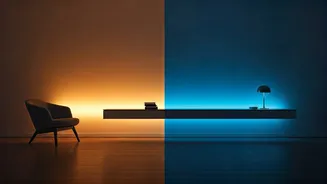
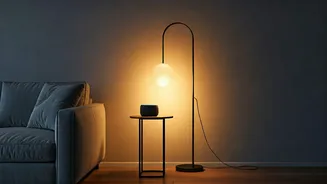
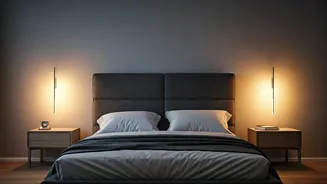
Perhaps the most significant shift is in *how* we use smart lighting. It’s no longer just about convenience or cool colors; it's about wellness. One of the biggest applications is circadian rhythm lighting. This feature allows your lights to automatically adjust their color temperature throughout the day, mimicking the natural progression of sunlight. It starts with a cool, blue-toned light in the morning to help you feel alert and gradually transitions to a warm, soft amber in the evening to help your brain wind down for sleep. Many systems now offer a “gentle wake-up” feature that slowly brightens your bedroom lights to simulate a sunrise, offering a far more pleasant start to the day than a blaring alarm clock. These features transform lighting from a static utility into a dynamic tool for improving your sleep, mood, and daily routines.
Smarter Security and Practical Savings
The lifestyle integration of smart lighting also has a deeply practical side. For home security, it’s a game-changer. Instead of relying on a simple timer when you're on vacation, smart lighting systems can randomize which lights turn on and off throughout the evening, creating a much more convincing illusion that someone is home. Many systems can also integrate with security cameras or motion sensors, turning on all the lights if unexpected activity is detected. Beyond security, there are real energy savings to be had. Smart bulbs are almost exclusively LEDs, which are already far more efficient than their incandescent predecessors. But the “smart” part adds another layer of savings. You can easily dim lights to the perfect level, schedule them to turn off when a room is empty, or ensure you never accidentally leave the whole house lit up when you leave for the day.