






First, It’s Not Just Flexibility
Before we go further, let’s clear up a common mix-up. For years, we’ve used “flexibility” to describe our ability to, say, touch our toes or fold into a pretzel. Flexibility is about passive range of motion—how far a muscle can lengthen, often with the help
of gravity or by pulling on it. Think of holding a hamstring stretch for 30 seconds. Mobility is different. It’s about active range of motion—how far you can move a joint yourself, using the muscles around it. It’s about control and strength through that entire range. Can you lift your leg high without using your hands to pull it up? That’s mobility. Can you perform a deep, stable squat? That’s hip, knee, and ankle mobility in action. Flexibility is a component of mobility, but mobility is the whole functional package: strength, stability, and control combined.
A Reaction to Modern Life
So why is everyone suddenly obsessed with mobility? In short, we’re rebelling against the stiffness of modern life. Our bodies were designed to move, but we spend our days hunched over desks, slumped on couches, and staring down at our phones. This creates a nation of people with tight hips, frozen shoulders, and aching lower backs. At the same time, the fitness world is experiencing a correction. The high-intensity-everything craze of the 2010s, epitomized by some early forms of CrossFit, often prioritized intensity over technique. This left many people strong and exhausted, but also injured and lacking fundamental movement quality. Mobility work is the antidote. It’s a proactive approach to injury prevention and a foundation for better performance, whether you’re a powerlifter, a runner, or just trying to pick up your kids without throwing your back out.
Yoga’s Starring Role
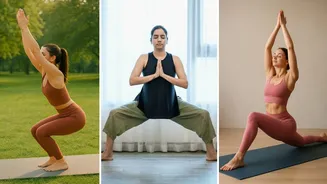
This is where yoga, an ancient practice, finds its modern moment. While many people associate yoga with static poses and deep stretching (flexibility), its true power lies in its dynamic potential. A well-sequenced Vinyasa or Ashtanga class is essentially a full-body mobility routine. You’re not just holding poses; you’re actively moving through them, flowing from one to the next. Think of the transition from Downward-Facing Dog to a lunge, or the controlled rotation of the spine in a twist. These sequences challenge you to control your joints at their end ranges, building both strength and awareness. Unlike isolated mobility drills that can feel clinical, yoga packages this work into an accessible, holistic practice. It requires minimal equipment, can be done almost anywhere, and adds a crucial element of breathwork and mindfulness that makes the process feel less like a chore and more like a moving meditation.
From Pro Athletes to Your Feed
The final ingredient in making mobility “cool” is cultural influence. It started with elite athletes. Superstars like LeBron James and Tom Brady, famed for their incredible longevity, have openly credited practices like yoga and mobility work for keeping them at the top of their game. When the best in the world prioritize movement quality over just raw power, people listen. This message has now cascaded down to the world of social media. Fitness influencers, once focused on showing off bulging biceps or six-pack abs, are now posting mesmerizing videos of “functional range conditioning” drills, spinal waves, and complex “animal flow” sequences. Mobility has developed its own aesthetic—one of control, grace, and quiet strength. It’s become a visual signifier that you’re not just working out for today, but investing in a healthy, capable body for life.