
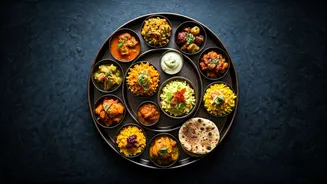
The Irresistible Pull of Chatpata
If you’ve ever found yourself compulsively eating a bag of salt-and-vinegar chips or devouring a plate of street tacos doused in lime and hot sauce, you understand the foundational appeal of 'chatpata.' It’s not just a word; it’s a flavor dimension. Translating
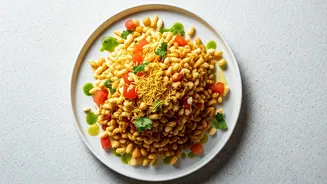
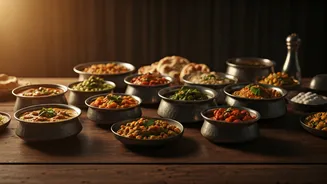
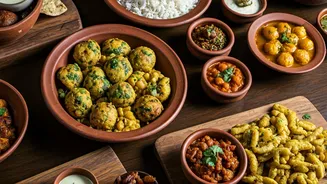
roughly to “lip-smacking,” chatpata is the chaotic, brilliant collision of tangy, spicy, sweet, and savory that defines much of India’s beloved street food. It’s the tamarind water in a *pani puri* that makes your eyes widen, the chaat masala sprinkled on fruit that electrifies your palate. For decades, this flavor was the king of the streets and home kitchens—raw, vibrant, and unapologetically bold. But in the formal dining rooms of urban India, something was missing. The food was often rich, heavy, and rooted in a centuries-old vision of celebratory cuisine. Now, that’s changing.
From Comfort Food to Culinary Concept
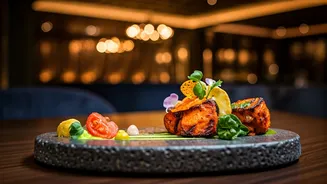
A culinary revolution is underway in cities like Mumbai, Delhi, and Bengaluru. A new guard of chefs, trained in global techniques but deeply connected to their local roots, is asking a powerful question: What if we treated chatpata not just as a flavor, but as a philosophy? The result is a movement that marries the soul of Indian street food with the precision and artistry of modern gastronomy. This isn't about fusion in the 1990s sense—tossing some curry powder into a risotto. This is about deconstruction and reinvention. Chefs are taking beloved, nostalgic dishes apart, understanding the science behind their appeal, and putting them back together in ways that are both startlingly new and deeply familiar. It’s a sophisticated evolution, moving beyond the predictable plates of chicken tikka masala that have defined Indian food for many in the West.
The Anatomy of 'Chatpata with Brains'
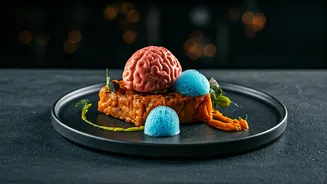
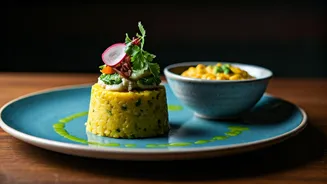
So, what does this look like on a plate? Imagine a classic *dahi vada*, traditionally a lentil fritter soaked in yogurt. In a modern Indian kitchen, that might become a light-as-air lentil foam served with a spiced yogurt sphere that bursts in your mouth. The beloved *khichdi*, a humble rice and lentil porridge, is being reimagined with indigenous grains like millet, topped with truffle oil or served alongside sous-vide duck. Street-side corn on the cob, usually rubbed with lime and chili, might be transformed into a delicate corn soup with a chili-lime sorbet. The 'brains' in the equation refer to this application of technique—spherification, fermentation, sous-vide, and foams—not to mask the original flavor, but to amplify it. It’s about creating new textures and presentations that make you taste a familiar flavor as if for the first time. It is Indian food that respects its past but isn't trapped by it.
A New Culinary Confidence
This trend isn't happening in a vacuum. It’s fueled by a generation of Indian diners who have traveled the world, eaten at Michelin-starred restaurants, and are now returning home, hungry for local flavors presented with global sophistication. They don’t want a cheap imitation of a Western dish; they want their own culinary heritage to be celebrated with the same level of care and creativity. Chefs like the late Manu Chandra of Monkey Bar and the team at Indian Accent in New Delhi have been pioneers, proving that Indian food could be playful, inventive, and world-class. They paved the way for a new wave of restaurants that proudly put regional, often-overlooked ingredients and recipes at the center of a fine-dining experience. This movement is a declaration of cultural confidence. It’s a statement that Indian cuisine doesn't need to be simplified or toned down for a global audience. Instead, its complexity and boldness are its greatest strengths, ready for their close-up.