


1. Your Tires’ Tread and Pressure
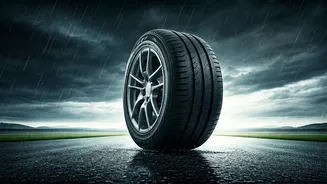
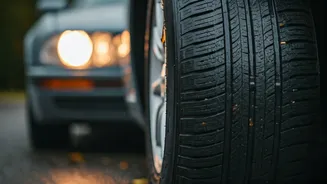
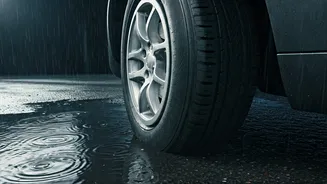
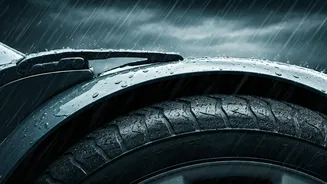
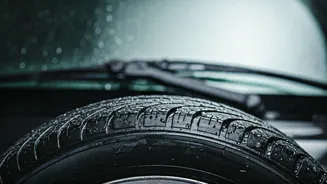
Think of your tires as your car’s shoes. Just as you wouldn’t wear slick-soled loafers on an icy sidewalk, you shouldn’t drive on worn tires in the rain. The deep grooves in your tires are designed to channel water away, allowing the rubber to maintain
contact with the road. When that tread wears down, a thin layer of water can lift your car off the pavement in a terrifying phenomenon known as hydroplaning. You can easily check your tread depth with a penny. Insert it into a groove with Lincoln's head upside down. If you can see the top of his head, your tires are likely worn out and need replacing. Also, check your tire pressure; both underinflated and overinflated tires can reduce traction and affect handling in wet conditions. Your car’s recommended pressure is listed on a sticker inside the driver’s door jamb.
2. The Windshield Wipers
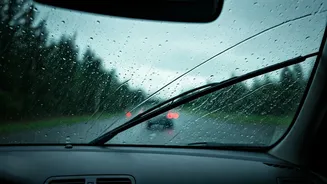
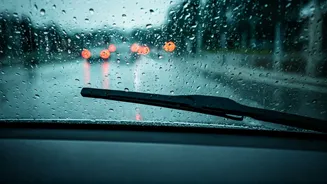
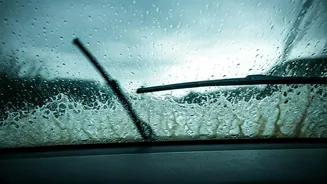
This seems obvious, but it’s the most commonly neglected item. We often don’t realize our wipers are shot until we’re caught in a downpour, squinting through a smeary, stuttering mess. Wiper blades are made of soft rubber that degrades over time from sun exposure, heat, and dirt. Inspect your blades for signs of cracking, splitting, or stiffness. Run your finger (carefully) along the edge; if it feels rough or nicked, it won’t make clean contact with the glass. A good rule of thumb is to replace them every 6-12 months. When visibility is reduced to just a few feet in a storm, a fresh, effective pair of wipers is one of the best safety investments you can make for under $40.
3. Headlights, Taillights, and Turn Signals
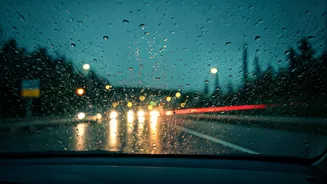
Rainy weather means low light and reduced visibility for everyone on the road. Your car’s lights aren't just for helping you see; they’re for helping others see you. A burned-out headlight or taillight can make your vehicle seem smaller, farther away, or even invisible to other drivers. Walk around your car with the lights on to ensure both headlights (low and high beams), taillights, and brake lights are working. Don't forget your turn signals and hazard lights. Many states have laws requiring headlights to be on whenever wipers are in use, a simple practice that dramatically increases your visibility and safety.
4. Your Brakes
Wet roads significantly increase your car’s stopping distance—sometimes by as much as two or three times the normal distance. While a full brake inspection is a job for a professional, you can be alert to warning signs. Do you hear a high-pitched squeal when you apply the brakes? That’s often the sound of the built-in wear indicator telling you it's time for new pads. Does the pedal feel spongy, soft, or go too close to the floor? This could indicate a problem with the brake fluid or hydraulic system. Any grinding or shuddering is an immediate red flag. If you notice any of these signs, get your brakes inspected by a certified mechanic before you’re in a situation where you need every inch of stopping power.
5. The Windshield and Glass
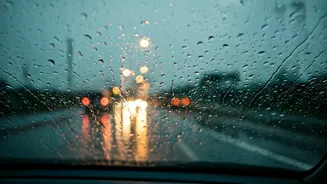
A clean, undamaged windshield is crucial for clear vision. Road grime and dirt on the outside can turn into a blurry film when wet, while fog and haze on the inside can be just as dangerous. Give your glass a thorough cleaning, inside and out. More importantly, inspect for any chips or small cracks. A sudden temperature change—like when you blast the defroster on a cold, rainy day—can cause a tiny chip to spread into a large crack that compromises the structural integrity of the windshield and obstructs your view. Many insurance policies cover chip repair for free, as it's much cheaper than replacing the entire windshield.
6. Windshield Wiper Fluid
This is another simple one that’s easy to forget. In a light drizzle, your wipers might handle the water just fine. But when you’re driving behind a truck on a wet highway, your windshield gets blasted with a grimy, oily road spray that plain water can't cut through. Without washer fluid, your wipers will just smear this mess across your field of vision, making things worse. Topping off your wiper fluid reservoir is a 30-second task that costs a few dollars, but its value in a sudden white-out of road spray is priceless. Keep it full.
7. The Battery and Its Connections
A car battery failure is never convenient, but it's especially miserable in the pouring rain. High humidity can expose a weak battery or a loose connection. Pop the hood and take a look at your battery terminals. Are they coated in a fuzzy, greenish-blue substance? That’s corrosion, and it can prevent the electrical system from getting the power it needs. You can clean it off with a wire brush (while wearing gloves and eye protection), but heavy corrosion might signal a slow leak or a failing battery. Most auto parts stores will test your battery for free. If it's more than three years old and showing signs of weakness, consider replacing it before it leaves you stranded.