




An Antidote to the Instagram Honeymoon
Let’s be honest. The pressure for a spectacular, post-worthy honeymoon can be immense. It often results in a frantic race across time zones, hopping from one landmark to another, more focused on capturing the moment than actually living in it. A 'slow
honeymoon' is the antidote. It’s a conscious decision to trade the packed itinerary for genuine immersion. It’s about savoring long mornings, taking unplanned walks, and connecting with your partner and your surroundings without the nagging feeling that you should be somewhere else, doing something else. Tirthan Valley, a serene river valley in the Indian state of Himachal Pradesh, feels like it was designed with this exact philosophy in mind. It isn’t a place of grand monuments or five-star resort chains; its luxury lies in its authenticity and its unhurried rhythm.
Where Nature Sets the Pace
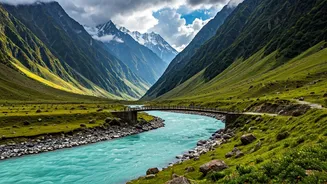
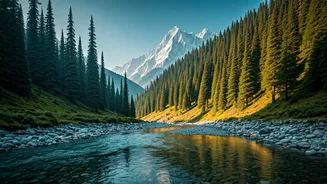
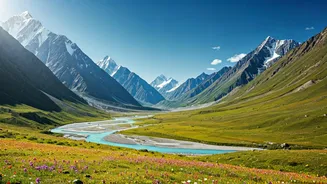
Nestled on the edge of the Great Himalayan National Park, a UNESCO World Heritage Site, Tirthan is defined by what it lacks: loud commercialism, traffic-clogged streets, and overwhelming crowds. What it has in abundance is staggering natural beauty. The valley is carved by the crystal-clear Tirthan River, teeming with trout and flanked by pine-forested hills and terraced fields. The air is crisp, the silence is broken only by birdsong and the rush of the river, and the landscape invites you to simply be. This isn't a place that screams for your attention; it gently earns it. For newlyweds decompressing from the beautiful chaos of a wedding, this environment is more than just a backdrop; it's a form of therapy.
Embrace the Homestay Experience
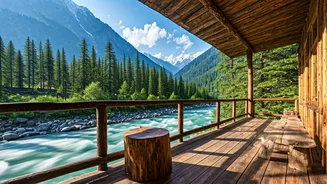
You won’t find sprawling, anonymous hotels here. The soul of Tirthan's hospitality lies in its network of charming homestays and small, family-run guesthouses. These aren’t just places to sleep; they are gateways to the local culture. Imagine waking up in a traditional wood-and-stone house, sipping chai on a balcony overlooking an apple orchard, and eating meals cooked with ingredients plucked from the garden that morning. Your hosts are not just staff; they are residents who share stories of the valley and offer tips on the best trails. This intimate setting fosters a sense of belonging and provides a warm, personal alternative to the sterile feel of a conventional hotel, allowing a couple to feel cared for and truly at home.
Your New To-Do List: Read, Walk, Fish
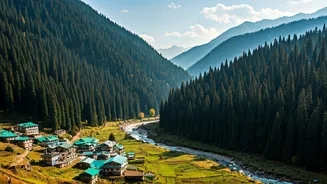
So, what do you *do* in Tirthan Valley? The better question is, what don't you have to do? There are no required sightseeing tours. Instead, days are filled with simple, soul-filling pleasures. Try your hand at angling for rainbow trout in the river. Pack a small picnic and hike to a hidden waterfall. Spend an entire afternoon reading a book by the water’s edge, with your feet dipped in the cool stream. Take long, meandering walks through traditional villages like Gushaini and Nagini, where life moves at a pace that has remained unchanged for decades. The goal isn’t to tick off a list but to discover small joys together—a shared glance as a Himalayan bulbul flits past, the satisfaction of reaching a scenic viewpoint, the simple comfort of a shared meal after a day in the fresh mountain air.
Practical Notes for the Journey
Getting to a place this secluded is part of the adventure. For U.S. travelers, the most common route is to fly into a major Indian hub like Delhi (DEL) and then take a short domestic flight to Bhuntar Airport (KUU) in Kullu, which is about a 90-minute to two-hour scenic drive from the valley. Alternatively, an overnight bus from Delhi to Aut, followed by a local taxi, is a popular and more budget-friendly option. The best times to visit are during the spring (March to June) and autumn (September to November), when the weather is pleasant and the landscape is at its most vibrant. A week is a perfect amount of time to truly settle in and let the valley work its magic.