



Begin with the Journey Itself
Slow travel on Majuli starts before you even arrive. The only way to reach the island is via a public ferry from Jorhat, a city in Assam. Don't treat this as a mere transfer; it's the first step of your immersion. Stand on the deck with locals, their
bicycles and motorcycles packed alongside cars and supplies. Watch the vast, milky-brown expanse of the Brahmaputra River unfold around you. The hour-long journey is a meditation, a chance to shed the mainland's urgency and sync with the river's pace. You may even spot Gangetic dolphins if you’re lucky. This is the perfect introduction to an island where nature dictates the rhythm of life.
Rent a Bicycle or Scooter
Once on Majuli, your mode of transport defines your experience. To truly travel slowly, skip the hired cars. Renting a bicycle or a scooter is the quintessential way to explore. The island is mostly flat, with narrow, tree-lined roads weaving through rice paddies and small villages. A bicycle allows you to move at a pace where you can greet people, stop for a cup of chai on a whim, and hear the birdsong that fills the air. A scooter offers a bit more range for reaching far-flung monasteries, but still keeps you connected to your surroundings. This isn’t about getting from Point A to B; it's about appreciating every moment in between.
Immerse Yourself in Sattra Culture
Majuli is the heart of neo-Vaishnavism in Assam, a monotheistic Hindu tradition, and its culture is preserved in monastic centers called *Sattras*. These are not just tourist sites; they are living institutions where monks (bhakats) practice music, dance, and crafts. Prioritize a visit to Auniati Sattra for its collection of artifacts and Kamalabari Sattra for its vibrant cultural performances. Go with a mindset of quiet observation. Sit and listen to the chanting, watch the monks go about their daily chores, and absorb the atmosphere of serene devotion. It’s a profound cultural experience that asks for nothing but your respectful presence.
Witness the Art of Mask-Making
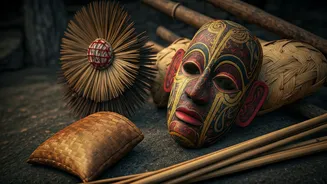
At the Samaguri Sattra, you'll find one of Majuli's most incredible living traditions: the art of mask-making. For generations, craftsmen here have created elaborate, expressive masks from bamboo, clay, and cloth, depicting gods, goddesses, and demons from Hindu epics. These masks are used in traditional *Bhaona* performances. Visit the workshop of Dr. Hem Chandra Goswami, a master craftsman who is passionate about preserving this art. Seeing the masks up close, from giant full-body creations to delicate face coverings, is a powerful connection to the island's artistic soul.
Stay in a Mishing Village
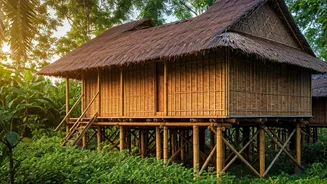
For true cultural immersion, arrange a homestay in a village of the Mishing tribe, one of the main indigenous communities on the island. Their homes are unique, built on stilts to protect against the annual monsoon floods. Staying with a family offers an unparalleled opportunity to understand local life. You’ll share simple, delicious meals cooked over an open fire, learn about their weaving traditions (the Mishing are renowned for their handlooms), and try the local rice beer, *apong*. It’s a humbling and heartwarming experience that fosters genuine human connection.
Chase the Sunset, Not the Clock
On Majuli, time is measured by the sun. One of the most cherished daily rituals is watching the sunset over the Brahmaputra. Find a quiet spot along the riverbank, perhaps near a ferry ghat or on a sandy outcrop. As the sun dips below the horizon, it paints the sky and water in fiery shades of orange, pink, and purple. There's no grand event, just a simple, powerful moment of natural beauty. It's a reminder to stop, breathe, and appreciate the world's quiet spectacles. Pair this with an early morning walk to watch the island wake up for the full experience.