





The Rise of the Curated Corner
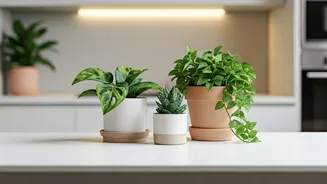
Take a look at any modern kitchen, whether on Instagram or in your neighbor’s home, and you’ll likely see it: a deliberate cluster of greenery. This isn’t the lonely, forgotten spider plant of the 1970s. This is a collection—a tiny, thriving ecosystem
curated with the precision of a museum director. A trailing pothos might snake its way around a ceramic canister, a sculptural snake plant might stand guard next to the knife block, and a small pot of basil might offer both fragrance and function. This isn't just decoration; it's a statement. The selection of pots, the variety of leaf textures, and the arrangement itself all communicate a specific vibe. Much like a mood board pulls together images and textures to define an aesthetic, this collection of plants tells a story about the homeowner. It says, “This is what brings me calm,” or “This is my connection to nature,” or simply, “I am someone who can keep things alive.”
Why the Kitchen Counter?
The placement is just as significant as the plants themselves. For decades, the kitchen was viewed as a purely utilitarian workspace. It was designed for efficiency, not emotion. But the modern American home has recentered itself around the kitchen. It’s where we gather for morning coffee, where kids do their homework, and where guests inevitably congregate during a party. Placing this living “mood board” in the busiest, most functional room of the house is a deliberate choice to integrate beauty and nature into the fabric of daily life. It’s a rejection of the idea that beautiful things should be sequestered in a formal, rarely used living room. By bringing this curated green corner to the countertop, we are ensuring it’s seen, appreciated, and interacted with every single day. It provides a moment of organic softness amid the hard surfaces of stainless steel, quartz, and tile.
Biophilia in the Busiest Room
This trend taps directly into the concept of biophilia—the innate human tendency to seek connections with nature. In our increasingly digital and urbanized lives, we crave that link. While we may not all have the time or space for a sprawling garden, we can create micro-doses of nature within our homes. A kitchen-counter garden serves as a powerful anchor of wellness. The simple act of watering a plant, seeing a new leaf unfurl, or snipping a fresh herb can be a grounding, mindful practice. In a room often associated with the stress of meal prep and cleanup, these plants offer a quiet, restorative counterpoint. They improve air quality, to be sure, but their more significant impact is psychological. They are a visual reminder to slow down, breathe, and appreciate the simple, living things around us.
Crafting Your Living Vignette
Creating one of these corners is an exercise in personal branding. The choice of plants and vessels reveals a lot. Are you a minimalist who prefers a single, dramatic ZZ plant in a sleek, monochrome pot? Or are you a maximalist, layering different heights and textures for a lush, jungle-like effect? Maybe you’re a pragmatist, focusing on an herb garden that’s both beautiful and edible. People are mixing varieties—choosing plants for their color, shape, and growth habit. A spiky succulent provides a different energy than a delicate fern. A collection of earthy, unglazed terracotta pots creates a rustic, bohemian feel, while a set of glossy, colorful planters feels more modern and playful. This is interior design on a micro-scale, but with the added dimension of life. It’s an evolving art piece that you get to tend, rearrange, and watch grow.