



It Creates an Instant Focal Point
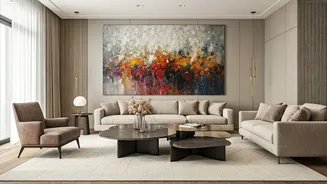
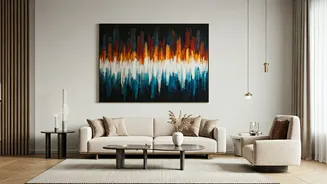
In any room, your eye naturally seeks a place to land. Without a clear focal point, a space can feel chaotic or forgettable. A large piece of art solves this problem instantly. By commanding attention, it tells you—and your guests—exactly where to look.
This single, deliberate statement makes a room feel curated and purposeful, as if every element was chosen with intent. Unlike a random collection of smaller items, a substantial artwork communicates confidence and sophistication. It acts like an anchor, grounding the room's design and making everything else around it feel more cohesive.
It Tricks the Eye to See More Space
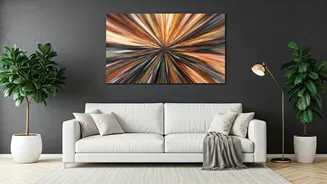
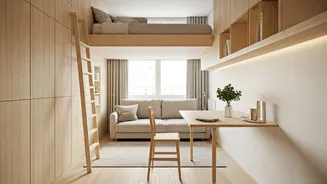
It might seem counterintuitive, but filling a wall with one large object can actually make a room feel bigger. A gallery wall with numerous small frames, for example, can break up the visual line of a wall, sometimes making it feel cluttered and smaller. In contrast, an oversized canvas or framed print draws the eye both upward and outward. This continuous visual sweep creates an illusion of height and breadth. The bold scale establishes a sense of grandeur that transcends the room’s actual square footage, making even modest spaces feel more expansive and airy. Your wall is no longer just a boundary; it becomes a destination.
It Reduces Visual Clutter
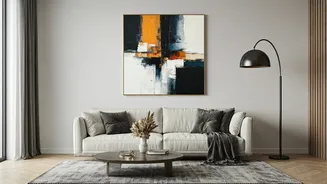
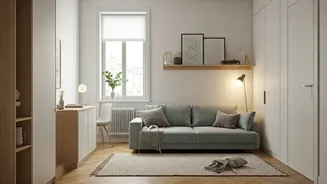
Luxury design is often as much about what isn't there as what is. A clean, uncluttered aesthetic reads as expensive because it implies thoughtful editing. While a busy wall of photos and prints can be charming, it can also devolve into visual noise. A single, impactful piece of art achieves the same wall coverage with a fraction of the clutter. It provides a moment of visual rest. This minimalist approach streamlines the decor, allowing other elements in the room, like a beautifully shaped sofa or a statement lamp, to shine. The result is a calmer, more serene environment that feels both polished and high-end.
It Unifies Your Color Scheme
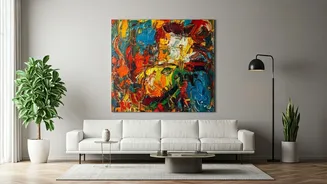
Struggling to tie a room together? A large artwork can be the missing link. A piece with a distinct color palette can serve as the definitive guide for your entire space. You can pull two or three hues from the art to use for accent pillows, a throw blanket, a vase, or even a rug. This simple trick creates an instant, professionally coordinated look without the guesswork. The artwork becomes the central theme, ensuring every decorative element feels connected and part of a larger, harmonious vision. It’s the easiest way to develop a sophisticated color story that looks like it was planned by a pro.
How to Get the Look for Less
The best part is that "big art" doesn't have to mean "big budget." You can find massive digital prints on sites like Etsy for a few dollars and have them printed locally at a copy shop. Another option is to create your own abstract art; a large canvas, a few sample pots of paint, and a putty knife for texture can produce a stunning, one-of-a-kind piece. Don't overlook fabric—a beautiful textile, a vintage scarf, or even a graphic shower curtain can be stretched over a simple wooden frame to create affordable, large-scale wall decor. Thrifting is also your friend; look for oversized frames with dated art that you can paint over or replace.
The Golden Rules of Placement
How you hang your art is just as important as the art itself. The most common mistake is hanging it too high. A good rule of thumb is to position the center of the artwork at eye level, which is typically between 57 and 60 inches from the floor. When hanging a piece above furniture like a sofa, headboard, or console table, leave a gap of about 6 to 8 inches. This creates a visual connection between the object and the art. For scale, aim for the artwork to be about two-thirds the width of the furniture it's hanging over. This ensures the proportions are balanced and the composition feels intentional.