








From Smart to Intelligent
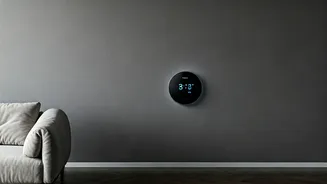
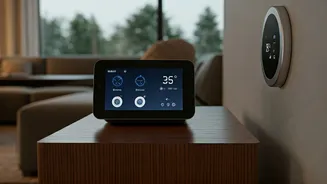
Let’s be honest: for most of us, the smart home is a bit of a disconnected orchestra. You tell Alexa to play a song, ask Google to dim the lights, and check your Nest camera on your phone. These devices are “smart” in the sense that they’re connected to the internet
and respond to your commands. But they’re reactive. They wait for you to tell them what to do. You are the conductor, constantly giving cues to each section, and if you stop, the music stops. The AI-powered home represents a fundamental shift from this command-and-response model. Instead of a collection of obedient gadgets, the goal is a single, cohesive intelligence—an ambient system that learns your patterns and preferences. It’s the difference between having a butler you have to micromanage and one who intuits that you’d like a cup of coffee shortly after you wake up, knows how you take it, and starts brewing it automatically.
A Day in the Life
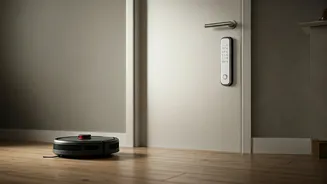
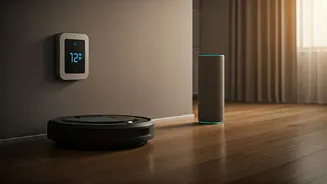
So what does this actually look like? Imagine this: Your home’s AI knows your work schedule. On a day you work from home, it keeps the thermostat in an energy-saving mode longer. As your first morning meeting approaches, it subtly adjusts the lights in your office to an energizing cool-white tone. It notices from your calendar that you have a video call and automatically silences smart speakers and pauses the robot vacuum until the call is over.
Later, you decide to watch a movie. You don’t say, “Hey, Google, movie mode.” You just turn on your TV after 8 p.m., and the system understands the context. The main lights dim, accent lighting comes on, the smart blinds close, and the surround sound system activates. The AI has learned this pattern. It’s no longer about programming complex “routines”; it’s about the house understanding intent and context, using data from various sensors—motion, light, sound, temperature, and even your digital calendar—to make intelligent decisions on your behalf.
The Technology Behind the Curtain
This leap from smart to intelligent is being powered by a few key developments. First, the proliferation of powerful, energy-efficient processors allows more machine learning to happen directly on devices (“at the edge”), rather than in the cloud. This makes responses faster and more secure. Second, a new generation of sensors can perceive the world with greater nuance—they can differentiate between a pet and a person, or detect the subtle sounds of a leaking pipe.
Perhaps most importantly, industry-wide standards like Matter are finally breaking down the walls between different brands. In the old smart home, your Apple, Google, and Amazon devices barely spoke to each other. Matter creates a common language, allowing a sensor from one brand to seamlessly trigger an action on a device from another. This interoperability is the bedrock upon which a truly unified home AI can be built. It allows the system to gather data from every corner of the home and orchestrate a holistic response.
More Than Just Convenience
While the convenience factor is obvious, the impact of a true AI home extends further. For elderly residents or those with mobility issues, a home that can anticipate needs, monitor for falls, and provide reminders is a game-changer for independent living. From a sustainability perspective, an intelligent home can optimize energy usage with a level of precision human oversight can’t match—adjusting heating based on which rooms are occupied, running appliances during off-peak energy hours, and even checking the weather forecast before watering the lawn.
Of course, this raises valid questions about privacy and data security. Handing over this much insight into our daily lives requires a significant level of trust. The companies leading this charge will have to prove their commitment to protecting user data, giving homeowners transparent controls over what is shared and how it's used. The success of the AI home will depend as much on building trust as it does on building technology.