





From Hobby to Necessity
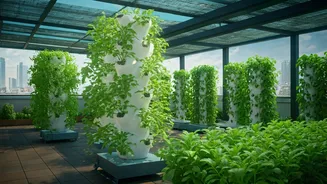
For decades, home gardening was seen as a quaint hobby, a way to get fresh air and maybe a few perfectly ripe summer tomatoes. But a significant shift is underway. Across the United States, balconies, rooftops, and small patios are being transformed into
productive micro-farms. This isn't just a trend driven by Pinterest boards; it's a practical reaction to the increasing fragility of our national food supply chain. When grocery store shelves went surprisingly bare during the early days of the pandemic, it was a wake-up call for millions. The complex, highly centralized system that brings food from giant farms to our tables proved to be less resilient than we thought. Suddenly, the ability to grow even a small portion of one's own food moved from the realm of lifestyle choice to a matter of practical security.
The Brittle Food Superhighway
Our modern food system is a marvel of logistics, capable of delivering strawberries from California to New York in winter. But its efficiency comes at the cost of resilience. The system relies on a long chain of interdependent links: harvesting, processing, packaging, and long-haul transportation. If one link breaks—due to a climate event like a hurricane or drought, a labor shortage, a fuel price spike, or a public health crisis—the entire chain is threatened. This centralization creates bottlenecks and vulnerabilities. A single contamination event at a large processing plant can lead to nationwide recalls, while a disruption in trucking can leave shelves empty in entire regions. We are deeply dependent on a system that is optimized for calm weather and predictable circumstances, neither of which is guaranteed in the 21st century.
The Power of a Decentralized Network
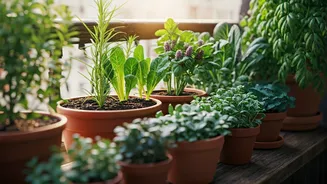
This is where the terrace gardening revolution becomes crucial. Every rooftop garden, community plot, and balcony planter acts as a small, independent node in a decentralized food network. It's the food equivalent of the internet versus a single, central library. If the library burns down, the information is lost. But if one part of the internet goes down, the network simply routes around it. Similarly, while a single terrace garden can't feed a city, a thousand of them can create a powerful buffer. They reduce the strain on the commercial supply chain, provide fresh produce when deliveries are delayed, and create pockets of food sovereignty in urban “food deserts” where fresh options are scarce. This hyperlocal production shortens the distance from farm to table to mere feet, eliminating nearly all the points of failure present in the industrial system.
Redefining 'Food Safety'
The movement also forces us to expand our definition of “food safety.” Traditionally, the term refers to protection from pathogens like E. coli and salmonella. While important, this view is incomplete. True food safety is also about food security—the reliable access to sufficient, affordable, and nutritious food. Terrace gardening contributes to this broader definition in several ways. Firstly, it gives the grower complete control over inputs. You know exactly what has (and has not) been sprayed on your lettuce. Secondly, it provides nutritional security. Produce begins losing nutrients the moment it's harvested; food from your own terrace is as fresh and nutrient-dense as it gets. Finally, it provides psychological safety—the peace of mind that comes from knowing you have a tangible source of sustenance independent of a vulnerable global system.