


More Than Just 'Food Miles'
The idea that local food is better for the planet often gets boiled down to one concept: 'food miles,' or the distance your food travels from farm to plate. It’s a simple metric, and it makes intuitive sense that a tomato from your county has a lighter
environmental impact than one flown in from another continent. While transportation is a factor, it’s only a small part of a food item's total carbon footprint—often less than the impact of production methods, processing, and refrigeration. So why is 'go local' still such a powerful shortcut? Because choosing local isn’t just about reducing travel distance. It’s about opting out of a vast, complex, and often opaque industrial food system. When you buy from a local producer, you're choosing food that has likely undergone less processing, required less long-haul refrigeration, and been handled by fewer people, all of which have their own environmental and energy costs. It simplifies the decision-making process by using proximity as a proxy for a whole host of other sustainable benefits.
The Taste of Freshness (and Less Waste)
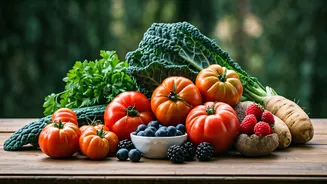
Let’s talk about a benefit you can taste immediately: quality. Produce grown for the industrial system is often bred for durability, not flavor. A tomato is selected because it can survive being picked while still green, jostled in a truck for thousands of miles, and artificially ripened with ethylene gas just before it hits the shelf. A locally grown heirloom tomato, however, is likely picked at peak ripeness because its journey to you is measured in hours, not weeks.
This peak freshness has a powerful sustainability side effect: it reduces food waste. Food that tastes better and lasts longer in your fridge because it hasn't spent an eternity in transit is food you are far more likely to eat. In the U.S., it's estimated that 30-40% of the food supply is wasted. By choosing fresh, vibrant local ingredients that you’re excited to cook with, you're fighting that statistic in your own kitchen. Less waste means the water, soil, and energy used to grow that food weren't spent in vain.
Investing in Your Own Backyard
Sustainability isn’t just about carbon; it’s about creating resilient, self-sufficient communities. When you buy from a farmer at a local market or join a Community Supported Agriculture (CSA) program, you are 'voting with your fork.' Your money goes directly to the producer, helping them maintain their livelihood, preserve precious farmland from development, and continue their work as stewards of the land.
This direct economic relationship fosters a stronger local food ecosystem. It supports small and mid-sized farms that might otherwise be squeezed out by large-scale agribusiness. It creates local jobs and keeps capital circulating within your community. This human-scale economic model is a critical, and often overlooked, pillar of true sustainability. Knowing the person who grows your food re-establishes a bond of trust and accountability that is impossible to replicate with a shrink-wrapped product from a faceless corporation.
How to Start Without Overthinking It
Embracing the local shortcut doesn't require a radical lifestyle overhaul. It's about making small, incremental changes. Start by visiting a farmers market once a month instead of your usual grocery run. You don’t have to buy everything there; just pick up one or two things that look amazing. In the supermarket, look for signs indicating local producers—many stores are making an effort to highlight them.
Consider joining a CSA, where you pay a farm upfront for a 'share' of the season's harvest. It’s a fantastic way to get a steady supply of seasonal produce and try new things. Even looking for local bakeries, butchers, or dairies counts. The goal isn't perfection. It’s about building a new habit and shifting your mindset, one delicious, locally-grown carrot at a time.