

First, What Is Terrazzo Anyway?
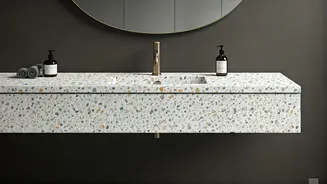
Before we get to the cool, new-school version, let’s talk about the original. Terrazzo is a composite material, essentially a cocktail of chips—marble, quartz, granite, glass, or other materials—held together by a binder, which is traditionally cement-based.
After it cures, the surface is ground and polished to a smooth, uniform finish, revealing the beautiful, speckled patterns of the aggregate. Its roots trace back to 15th-century Venice, where resourceful mosaic workers used leftover marble chips from lavish projects, mixed them with clay, and sealed them to create inexpensive flooring for their own terraces (hence the name, *terrazzo*). For decades, it’s been a durable, elegant, and somewhat institutional choice for floors and walls. Think Hollywood Walk of Fame stars or the gleaming floors of a vintage airport terminal. It’s always been beautiful, but its modern reinvention is where things get really interesting.
The Problem with Perfect Slabs
The process of quarrying stone and manufacturing large-format tiles or slabs for countertops and floors is incredibly wasteful. For every perfect, uniform slab that makes it to a high-end kitchen, countless other pieces are discarded. Remnants, offcuts, and pieces with slight imperfections or irregular shapes are often destined for the landfill. This isn't just a waste of beautiful material; it's a significant environmental burden, contributing to construction debris and squandering the energy used to extract and process the stone in the first place. This is the problem that a new wave of environmentally conscious designers and artisans decided to tackle. They looked at piles of these discarded stone and terrazzo fragments not as trash, but as a palette of raw, untapped potential. What if, instead of demanding perfection, they celebrated the imperfections and gave these beautiful cast-offs a second life?
From Industrial Waste to Centerpiece
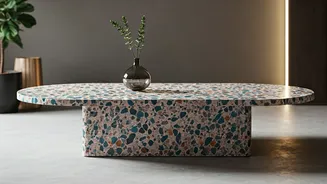
This is where the upcycling magic happens. Designers are collecting these terrazzo remnants—along with other stone offcuts and even recycled glass—and using them as the aggregate in new creations. Instead of the small, uniform chips of traditional terrazzo, they’re using larger, more dramatic fragments. These pieces are artfully arranged in a mold and then bound together with a modern, often eco-friendly resin or a specialized concrete mix. Once cured and polished, the result is spectacular. The finished surface is a mosaic of chunky, abstract shapes and vibrant colors, where each fragment tells a story. No two tables are ever identical. One piece might feature a large shard of veined Carrara marble next to a sliver of black granite and a pop of sea-green recycled glass. The final product is less a uniform pattern and more a captivating geological puzzle, frozen in time and polished to a high-end sheen.
Why It’s More Than Just a Table
Owning one of these pieces is about more than just aesthetics; it’s about embracing a philosophy. In a world of mass production, an upcycled terrazzo table is a statement of individuality and conscious consumerism. It carries a narrative of renewal and resourcefulness. You’re not just buying a piece of furniture; you’re buying a story of transformation—an object that diverts waste from landfills and celebrates the beauty of imperfection. This aligns perfectly with a growing desire for homes filled with meaningful objects. We no longer want our spaces to look like a catalog page, identical to our neighbors. We want unique items that reflect our values. A coffee table made from the remnants of other projects brings character, history, and a tangible connection to sustainability right into the heart of the living room. It becomes an instant conversation starter, not just for its looks, but for the clever idea behind it.
Sustainability as the New Luxury
For a long time, luxury was defined by rarity, exotic materials, and flawless craftsmanship. While craftsmanship remains key, the definition of what makes something desirable is shifting. Today, true luxury is increasingly about uniqueness, narrative, and ethical production. Upcycled terrazzo furniture sits at the intersection of all three. These are not cheap, DIY-looking items. They are meticulously crafted, heavy, and polished pieces that command attention and hold their own in the most sophisticated interiors. Designers are proving that “recycled” doesn’t have to mean rustic or unrefined. In this new paradigm, the most luxurious thing you can own is something beautiful that was made with intelligence and care for the planet—a piece that is both gorgeous and guilt-free.