




From Unwanted to Essential
In orchards across the globe, mango trees are often thinned of their young, green fruit to allow the remaining ones to grow larger and sweeter. This process, along with seasonal surplus, generates tons of unripe mangoes that might otherwise be discarded.
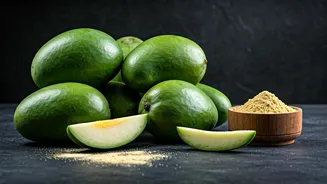
But in a brilliant example of culinary upcycling, this so-called 'waste' is the key ingredient for a powerhouse of the spice world: amchur. Originating from India, amchur (also spelled amchoor) is a powder made by harvesting green mangoes, slicing the flesh, sun-drying the strips until they are brittle, and grinding them into a fine, beige-colored dust. This ancient preservation technique transforms a perishable, astringent fruit into a shelf-stable ingredient with a unique, concentrated tartness that can be deployed in the kitchen year-round. It’s a perfect solution to food loss, turning a byproduct of cultivation into a prized commodity.
What is This Tangy Gold?
Think of amchur as sourness in a bottle, but with more complexity than a simple squeeze of lemon. Its flavor profile is distinctly tart and acidic, but with a subtle, honeyed fruitiness lingering in the background. Unlike fresh citrus, it delivers a potent sour punch without adding extra liquid, making it ideal for dry rubs, spice blends, and situations where you want to control moisture. In Indian cooking, it's the secret weapon in countless dishes, providing a foundational tang to lentil soups (dal), chickpea curries (chana masala), and street-food snacks like samosas and pakoras. It functions much like tamarind or vinegar but has its own unique character—less sweet than tamarind, less sharp than vinegar, and with a fruit-forward note that is all its own. It's the kind of ingredient that, once you start using it, makes you wonder how your spice rack ever survived without it.
Your New Kitchen Secret Weapon
While amchur is a staple in South Asian cuisine, its potential in the modern American kitchen is limitless. It’s a game-changer for anyone who loves bright, tangy flavors. Looking to liven up your grilling? Add a teaspoon of amchur to a barbecue rub for chicken or pork; its acidity acts as a natural tenderizer and balances the richness of the meat. Roasting vegetables? A sprinkle of amchur over potatoes, cauliflower, or sweet potatoes before they go in the oven adds a surprising, zesty kick that cuts through the sweetness. You can also whisk it into vinaigrettes for a complex sour note, stir it into yogurt-based dips and marinades, or use it to season fried foods like french fries or calamari for an instant flavor upgrade. It can even be used to brighten up a pot of chili or a hearty stew, much like a finishing splash of vinegar, but with a more nuanced, fruity tang.
More Than Just a Powder
The transformation of raw mango doesn’t stop with amchur. The whole, unripe fruit is culinary gold in its own right. In many cultures, firm, green mangoes are shredded into crisp, refreshing salads, often paired with peanuts, chili, and lime juice for a vibrant mix of textures and flavors. They are also the star of countless pickles and chutneys, where their firm flesh holds up beautifully to brining and spicing, creating condiments that range from fiery and pungent to sweet and sour. Even the pits, or seeds, are being explored in food science for their oil and nutrient-rich 'kernel butter.' This holistic approach ensures that every part of the fruit has a purpose, challenging our very definition of 'food waste' and proving that value and deliciousness can be found in the most unexpected places.