






A Himalayan Game-Changer
For decades, the idea of a seamless, all-weather railway line connecting the Kashmir Valley to the rest of India felt more like a dream than a viable project. The region, nestled within the formidable Pir Panjal range of the Himalayas, is plagued by harsh
winters, seismic activity, and landslide-prone geology that makes road travel notoriously unreliable. But that long-held dream is now taking concrete form. The Indian government recently inaugurated a crucial 30-mile stretch of the Udhampur-Srinagar-Baramulla Rail Link (USBRL), a massive infrastructure project designed to provide dependable connectivity to this strategic and isolated corner of North India. This new section, linking Sangaldan to Reasi, marks the near-completion of a project over two decades in the making, bringing the goal of a direct train from Jammu to Srinagar, the summer capital of Jammu and Kashmir, tantalizingly close.
Engineering Against All Odds
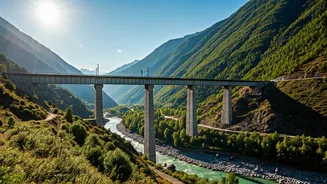
The centerpiece of this achievement, and the reason it's capturing global attention, is the Chenab Rail Bridge. This is not just any bridge; it's an architectural marvel. Arching gracefully over the Chenab River, its deck stands an astonishing 1,178 feet above the riverbed, making it the highest single-arch railway bridge in the world. To put that in perspective for an American audience, it’s taller than the Eiffel Tower by more than 100 feet. Constructing it required overcoming extreme temperatures, high winds, and the complex geology of the Himalayas. Engineers used over 28,000 metric tons of steel, developing special blast-proof and corrosion-resistant alloys to ensure the bridge can withstand the region’s seismic risks and security threats for a design life of 120 years. This bridge, along with the numerous tunnels that make up the bulk of the USBRL project, represents a triumph of human ingenuity over one of Earth's most difficult landscapes.
More Than Just a Train Track
For India, the USBRL is far more than a simple transportation upgrade; it's a project of immense strategic and symbolic importance. Historically, the primary land route to the Kashmir Valley, a national highway, is frequently closed in winter due to heavy snowfall and is vulnerable to landslides year-round. This has not only isolated the local population but also posed a significant logistical challenge for the Indian military, which maintains a heavy presence in the sensitive border region. The new railway provides an all-weather, all-season alternative, ensuring a reliable flow of goods, services, and security personnel. It’s a powerful tool for national integration, physically and symbolically binding the remote valley more closely to the rest of the country and reinforcing India's administrative control.
An Economic Lifeline for the Valley
Beyond its strategic value, the railway is poised to be an economic game-changer for the people of Jammu and Kashmir. The region is famous for its apples, saffron, and handicrafts, but getting these goods to market has always been a costly and uncertain endeavor. The railway promises to drastically reduce transport costs and spoilage, boosting the incomes of farmers and artisans. Furthermore, the breathtaking scenery of the Kashmir Valley has long made it a popular tourist destination, often called the "Switzerland of the East." The ease and comfort of rail travel are expected to spark a significant increase in tourism, creating jobs and stimulating local economies. For the first time, travelers will be able to journey into the heart of this stunning landscape on a modern train, an experience that promises to be a destination in itself.