







A Fortress That Breathes
Unlike the grand, empty palaces and forts that dot much of India, Jaisalmer Fort is something else entirely: a living city. It’s one of the last 'living forts' in the world, a designation that means thousands of people still reside within its ancient
walls. Their ancestors have lived here for generations, running shops, guesthouses, and restaurants that line the labyrinthine alleys. This isn’t a sterilized museum exhibit viewed from behind a velvet rope. It’s a breathing, evolving community. When you walk its pathways, you aren't just a tourist observing history; you're a temporary resident, stepping into a flow of daily life that has persisted for centuries. You'll pass children playing cricket in dusty courtyards, smell spices wafting from family kitchens, and hear the murmur of conversation from intricately carved balconies. This simple fact transforms a sightseeing trip into an immersive cultural experience.
The Magic of Yellow Sandstone
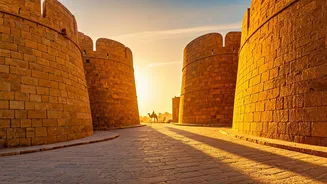
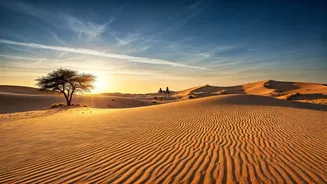
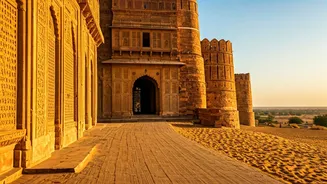
The fort’s nickname, Sonar Qila or the 'Golden Fort,' is no marketing gimmick. It’s a literal description. Built in 1156 from honey-hued yellow sandstone, the entire structure seems to radiate a warm, golden light. The effect is most dramatic at sunrise and sunset. In the early morning, the walls glow with a soft, ethereal light, appearing to rise like a mirage from the Thar Desert. As the sun climbs, the stone takes on a brighter, almost incandescent quality. But it’s the evening that provides the most breathtaking spectacle. As the sun dips below the horizon, the fort is set ablaze in shades of deep orange, honey, and gold, looking less like a man-made structure and more like a mythical city forged from solid sunlight. This daily light show is a photographer’s dream and a profound reminder of how architecture and nature can blend seamlessly.
Why Walking Is the Only Way
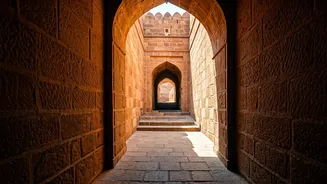
The phrase 'Golden Fort walks' is key because there is simply no other way to properly experience it. The fort was built for people, not cars. Its interior is a tangled web of narrow, winding lanes—some barely wide enough for two people to pass. This is where its magic lies. Walking is not just a mode of transport here; it’s the activity itself. Every turn reveals a new discovery: a hidden Jain temple with impossibly detailed carvings, a tiny shop selling vibrant textiles, or a quiet rooftop café offering panoramic views of the city and the endless desert beyond. Following the ramparts on foot allows you to trace the fort’s defensive perimeter, peering through cannon placements and imagining centuries of history unfolding below. A vehicle could never navigate these spaces, and rushing through would mean missing the soul of the place, which is found in the quiet moments of aimless wandering.
Your Smart Alternative to the Crowds
For many travelers, India's 'Golden Triangle'—Delhi, Agra, and Jaipur—can be an overwhelming assault on the senses. The sheer density of tourists at the Taj Mahal or Amer Fort can sometimes detract from the wonder. Jaisalmer offers a 'smart' alternative. While still popular, its remote desert location means it receives a fraction of the traffic. The pace is slower, the atmosphere more relaxed. You can explore the fort’s alleys without being constantly jostled, find a quiet corner to sit and reflect, and engage with locals who aren’t jaded by overwhelming tourism. It’s a destination that rewards travelers seeking depth over a frantic checklist. Choosing Jaisalmer is choosing a more intimate and personal encounter with the history and culture of Rajasthan, making it a strategic pick for anyone looking to escape the well-trodden path and find something more authentic.