





An Oasis in the Concrete Jungle
In densely populated cities like Mumbai, Delhi, and Bangalore, private outdoor space is a precious commodity. For millions living in apartment buildings, the balcony is their only connection to the open air. Traditionally, these spaces served purely functional
roles. But a growing movement, blending practicality with a desire for freshness, is transforming them into lush, productive herb gardens. This isn't just about aesthetics; it's a clever adaptation to urban life. By cultivating a small patch of green, residents are creating a mini-sanctuary that offers a respite from the city's relentless pace while serving a profoundly useful purpose.
The Kitchen's Essential Extension
The true genius of the Indian balcony garden lies in its direct link to the kitchen. Indian cuisine is renowned for its complex and aromatic flavor profiles, built upon a foundation of fresh ingredients. Having key herbs within arm's reach transforms daily cooking from a chore into an act of creation. Instead of relying on store-bought, often-limp bunches of herbs, home cooks can snip exactly what they need, ensuring maximum potency and flavor. A sprig of fresh curry leaves can instantly elevate a simple lentil dish, while a handful of mint and coriander can be ground into a vibrant chutney in minutes. This immediate access to freshness is not a luxury; it’s a core component of authentic home cooking.
The Living Spice Box
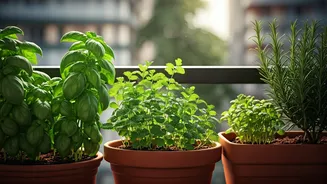
Walk past a row of apartment buildings in India, and you're likely to see a familiar cast of characters thriving in pots. At the forefront is tulsi, or holy basil. Revered in Hinduism and a powerhouse in Ayurvedic medicine, a tulsi plant is a fixture in many homes, used for everything from religious rituals to brewing a soothing tea for coughs and colds. Alongside it, you’ll find the feathery leaves of the curry tree (kadipatta), indispensable in South and West Indian cooking for the unique, savory aroma it imparts when sizzled in hot oil. And no garden would be complete without coriander (dhania) and mint (pudina), the workhorses of Indian garnishes, chutneys, and cooling summer drinks. These plants form a living, breathing spice box, tailored perfectly to the needs of the household kitchen.
More Than Just Ingredients
Beyond their culinary utility, these balcony gardens foster a deeper connection—to food, nature, and community. The daily ritual of watering and tending to plants provides a moment of mindfulness. It becomes a way for parents to teach children where their food comes from, a tangible lesson in a world of packaged goods. In the close-knit fabric of Indian neighborhoods, a thriving garden can also be a social asset. It’s not uncommon for a neighbor to call over for a few sprigs of mint or a stem of curry leaves, reinforcing community bonds. The garden becomes a symbol of resourcefulness and self-sufficiency, a small but proud declaration of a home's ability to provide for itself.