





The Ghost of the Green Revolution
To understand why a carrot in Mumbai might not taste like it used to, you have to go back to the 1960s. Facing the threat of widespread famine, India embarked on an ambitious agricultural overhaul known as the Green Revolution. Aided by international
scientists, the country adopted high-yield varieties (HYVs) of wheat and rice, embraced chemical fertilizers and pesticides, and expanded irrigation. On paper, it was a staggering success. India went from a nation dependent on food aid to a self-sufficient agricultural powerhouse, a feat that staved off mass starvation and reshaped its destiny. But this victory came with a hidden cost. The entire system was re-engineered for one primary goal: quantity. Farmers were incentivized to abandon thousands of indigenous, climate-adapted crop varieties in favor of a handful of government-approved, high-producing monocultures. These HYVs were bred for durability, disease resistance, and, above all, yield. Flavor, aroma, and nutritional diversity were, at best, an afterthought.
When More Meant Less
The trade-off became apparent on the dinner plate. The new rice varieties were often less fragrant than the traditional basmati or jeerakasala they replaced. Tomatoes were bred to be firm and uniform for easy transport, losing the juicy, complex sweetness of heirloom varieties. Lentils, or dals, a cornerstone of the Indian diet, saw a similar shift. Indigenous dals, once celebrated for their distinct tastes and textures, were sidelined for faster-growing, higher-yielding versions that many older Indians complain are bland by comparison. This isn't just nostalgia. Scientists and agronomists have confirmed that many traditional crop varieties are, in fact, more nutrient-dense and flavorful. Their genetic diversity allowed them to develop unique characteristics suited to specific microclimates over centuries. The modern system, focused on standardization, ironed out these regional nuances. The food became plentiful and predictable, but it also became homogenous. The taste of a specific place—the unique terroir that gives food its identity—began to fade.
The Seeds of Change
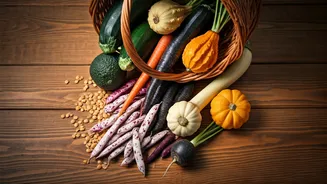
Today, a powerful counter-movement is taking root across the country. It’s a grassroots effort led by a diverse coalition of farmers, chefs, scientists, and everyday consumers who are asking a simple question: What did we lose, and how do we get it back? The answer, for many, lies in “desi,” or native, seeds. Seed banks and farming collectives are springing up to preserve and redistribute heirloom varieties that were nearly lost. Farmers are re-discovering the resilience of indigenous crops that require fewer chemical inputs and are better adapted to local weather patterns, a crucial advantage in an era of climate change. This isn't a rejection of progress but a re-evaluation of its definition. Proponents argue that true food security isn't just about calories; it's about nutritional quality, biodiversity, and cultural continuity. They are farming not just food, but memory.
From Farm to Five-Star Table
This revival is most visible in India's booming food scene. Top chefs in Delhi, Mumbai, and Bangalore are building their menus around forgotten ingredients. They are championing millets over wheat, sourcing black rice from the northeast, and creating dishes with vegetables that many of their younger diners have never seen before. By putting these ingredients on their prestigious menus, they are creating market demand and making it economically viable for farmers to grow them again. This movement resonates deeply with a growing urban middle class that, like its counterpart in the U.S., is increasingly concerned with wellness, sustainability, and authenticity. They are seeking out organic markets, subscribing to farm-share boxes, and paying a premium for food that tastes real. It’s a return to a philosophy where food is not just fuel, but a direct connection to land, culture, and health.