





What is DRS, Anyway?
DRS stands for Decision Review System. At its core, it’s cricket’s version of instant replay, designed to eliminate obvious umpiring errors. Think of it as a team’s 'challenge flag' in the NFL. Before DRS was introduced in 2008, the on-field umpire’s
decision was final, leading to countless careers and matches being defined by a single human mistake. The system gives players a chance to send a questionable call upstairs to a 'Third Umpire' who uses a suite of technologies to make a more accurate judgment. Each team gets a limited number of reviews per innings (a segment of the game, like a half in football), so using them is a massive strategic decision. Waste them early, and you could be left helpless on a game-changing bad call later on.
The Technology Behind the Call
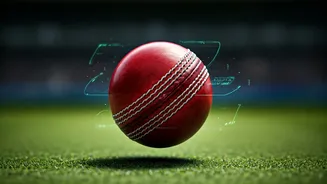
The Third Umpire isn’t just watching a slow-motion replay. They have a powerful toolkit to dissect the action. The two most important technologies are: **1. Hawk-Eye:** This is the famous ball-tracking technology you might have seen in tennis. Multiple high-speed cameras track the ball's trajectory from the bowler's hand to the batsman. For 'Leg Before Wicket' (LBW) appeals—where the question is whether the ball would have hit the stumps if the batsman's leg wasn't in the way—Hawk-Eye predicts the ball's path. It's the system that draws that iconic colored line showing where the ball pitched and its projected path toward the wickets. **2. UltraEdge (or Snicko):** This technology focuses on sound. It uses a highly sensitive microphone near the stumps and analyzes the sound waves to detect faint touches. When a replay is slowed down, you'll see a waveform graph. A sharp spike on that graph at the exact moment the ball passes the bat is conclusive evidence of a 'nick' or faint edge—often the difference between being 'out' and 'not out'. This helps resolve disputed catches.
How a Review Works
The process is a piece of high-stakes theater. It starts when an on-field umpire makes a decision—let's say they rule a batsman 'out.' If the batting team believes it's the wrong call, the batsman on the field has 15 seconds to signal for a review by making a 'T' gesture with their hands. The game stops, and the tension builds. The on-field umpire communicates with the Third Umpire, who begins the forensic process. The broadcast shows the whole world the same evidence the umpire sees: slow-motion replays, UltraEdge sound analysis, and finally, the Hawk-Eye projection. After reviewing all the angles, the Third Umpire makes a final determination, which is relayed to the on-field umpire and announced to the stadium. It's a nerve-wracking wait that can completely shift a match's momentum.
The Big Controversy: 'Umpire's Call'
Here’s where it gets complicated—and controversial. The technology isn’t perfect; it has a margin of error. 'Umpire's Call' is a mechanism to account for that. It comes into play during tight LBW decisions. If Hawk-Eye shows that the ball was just barely clipping the edge of the stumps, it's considered a 'marginal' decision. In these cases, the system defers to the original decision made by the on-field umpire. So, if the umpire originally gave the batsman 'out,' they stay out. If they gave them 'not out,' they stay not out. This infuriates fans and players because the same ball can result in two different outcomes depending on the umpire's initial gut feeling. Critics argue it defeats the purpose of technology, while supporters say it rightly preserves the human element in borderline situations.
More Than Just Replay
The DRS isn't just a tool for accuracy; it's a fundamental part of cricket strategy. A team's captain must weigh the odds before using one of their precious reviews. Is the star batsman worth saving with a 50/50 challenge? Is it better to hold onto reviews for the final, most critical phase of the game? This risk-reward calculation adds a layer of psychological warfare to the sport. Players are now more aware of the rules, listening for faint sounds and watching ball trajectories with an expert eye, constantly calculating whether a challenge is worth it. It has turned every player into a part-time umpire, making for a smarter, more engaging spectacle.