

More Than Just Nostalgia
For decades, the pinnacle of American dining seemed to be an escape from America itself. French techniques, Italian ingredients, and Japanese precision dominated fine dining. Meanwhile, our own homegrown cuisines—the stews of Appalachia, the hotdish of the Midwest,
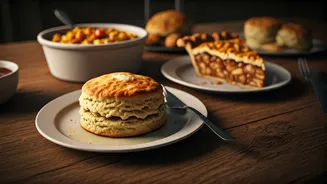
the chowders of New England—were relegated to the realm of 'quaint' or 'comforting,' but rarely 'cool.' They were the food of grandmothers, not gourmands. But a cultural shift is underway. The new appreciation for regional home cooking isn't just about nostalgia for a bygone era. It’s about a deeper search for identity, story, and a sense of place. It’s a recognition that a perfectly baked biscuit from a generations-old recipe tells a more profound story than another dish of avocado toast.
A Quest for Realness
So why now? In an age saturated with globalized menus and fleeting TikTok trends, there’s a growing hunger for authenticity. Diners and home cooks are tired of food that feels disconnected and generic. Regional home-style cooking offers a powerful antidote. It is, by its very nature, specific. It’s tied to a particular landscape, a unique history, and a community’s shared experience. Gullah Geechee red rice isn't just rice; it’s a direct link to West African culinary traditions preserved through centuries of struggle and resilience. A Wisconsin fish fry isn’t just fried fish; it’s a social ritual built around Catholic heritage, community halls, and local taverns. This food has a point of view. It’s unapologetically itself, and in a world of filters and curated perfection, that kind of realness has become the ultimate luxury.
Champions of the Regional
This movement isn’t happening in a vacuum. A new generation of chefs, authors, and historians are acting as passionate advocates, elevating these cuisines without stripping them of their soul. People like Sean Brock have championed the preservation of heirloom Appalachian ingredients, while Mashama Bailey at The Grey in Savannah, Georgia, has earned national acclaim by reinterpreting and celebrating Port City Southern food. These culinary leaders aren't just opening restaurants; they are building archives. They are studying historical texts, reviving near-extinct crops, and giving credit to the often-unseen home cooks—particularly Black and Indigenous women—who were the true architects of American cuisine. They treat a skillet of cornbread with the same reverence a French chef reserves for a mother sauce, forcing the culinary world to recalibrate what it deems worthy of respect.
The Instagram-able Casserole
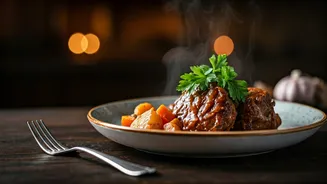
It also helps that our definition of 'beautiful food' is expanding, thanks in large part to social media. For years, visual-first platforms favored brightly colored, meticulously plated dishes. 'Brown food'—stews, braises, and casseroles—struggled to compete. But the aesthetic is shifting. A rustic, bubbling pot pie served in a vintage dish, a skillet of cornbread with a deeply burnished crust, a simple bowl of creamy grits—these images now communicate a different kind of aspiration. It’s not about perfection; it’s about warmth, abundance, and heritage. The context is as important as the food itself. That cast-iron pan, that checkered tablecloth, that family story shared in the caption—all of it combines to make home-style cooking visually and emotionally compelling for a new audience. It proves that 'cool' can also be cozy.