




Why Ditching the Dirt Is a Game-Changer
For apartment dwellers, traditional potted plants can feel like a compromise. They demand floor or counter space, invite pests like fungus gnats, and inevitably lead to stray soil on your clean floors. Soil-free gardening, most commonly known as hydroponics,
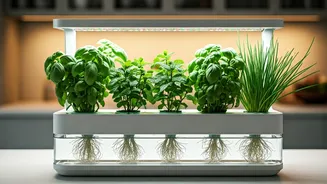
sidesteps all these issues. By delivering nutrients directly to the plant's roots through water, it eliminates the mess and the most common source of household pests. This method gives you complete control over the growing environment, often resulting in faster growth and more reliable yields. It’s a clean, efficient, and surprisingly compact way to bring a productive garden indoors, turning a sliver of your kitchen counter or a forgotten corner into a source of fresh food and vibrant greenery.
How Does It Actually Work?
The word 'hydroponics' might conjure images of futuristic labs, but the principle is beautifully simple. In nature, soil acts as a reservoir for water and nutrients. Hydroponics just delivers those same essential minerals directly, using a nutrient-rich water solution instead. The plant's roots are either suspended directly in this solution or supported by an inert medium like coconut coir, clay pebbles, or rockwool, which provides stability without the mess of dirt. This setup allows you to create the perfect conditions for your plants to thrive, regardless of the poor lighting or drafty windows common in urban living spaces. It’s less about complicated science and more about providing exactly what a plant needs, when it needs it.
Entry Point: The Countertop System
The easiest on-ramp to soil-free gardening is the all-in-one countertop unit. Brands like AeroGarden and Click & Grow have perfected this model, offering systems complete with a water reservoir, a built-in LED grow light, and pre-seeded pods for herbs, salad greens, and even cherry tomatoes. These are the 'set it and forget it' option. You simply add water and liquid nutrients every few weeks, and the machine handles the light cycles automatically. They are designed for beginners and fit seamlessly onto a kitchen counter, making it incredibly easy to snip fresh basil for your pasta or mint for your tea. While they represent an initial investment, their convenience and success rate make them a popular choice for aspiring apartment gardeners.
DIY Option: The Simple Mason Jar
If you're on a budget or enjoy a hands-on project, the Kratky method is an ingenious, non-circulating hydroponic technique that requires no pumps or electricity. All you need is a mason jar (or any opaque container), a net pot to hold the plant, a growing medium, and a hydroponic nutrient solution. You fill the jar with the nutrient solution, place the plant in the net pot so its roots are partially submerged, and that’s it. As the plant grows, the water level drops, creating a humid pocket of air that provides oxygen to the roots. It’s a passive, low-maintenance system perfect for growing a single lettuce head or a basil plant on a windowsill.
Go Vertical: The Small-Footprint Tower
When floor space is the ultimate luxury, the only way to go is up. Vertical hydroponic towers are the ideal solution for maximizing your harvest in a tiny footprint. These systems, which look like futuristic sculptures, stack multiple growing pods vertically. A small pump at the base sends the nutrient-rich water to the top, which then trickles down through the system, nourishing the roots of each plant along the way. A single tower occupying just a couple of square feet of floor space can grow dozens of plants at once—from a full salad bar of lettuces and spinach to a bounty of strawberries. They are the most efficient way to turn a small, sunny corner into a highly productive indoor farm.
Best Plants for Beginners
While you can grow almost anything hydroponically, some plants are much more forgiving for beginners. Leafy greens like lettuce, spinach, and kale are practically foolproof and grow incredibly fast. Herbs are another fantastic choice; basil, mint, parsley, and chives all thrive in simple hydroponic setups and provide immediate culinary rewards. Once you have a little experience, you can move on to small fruiting plants like cherry tomatoes and strawberries, which are immensely satisfying to grow indoors, especially in the middle of winter.