







Know Your Enemy: The Flash Flood
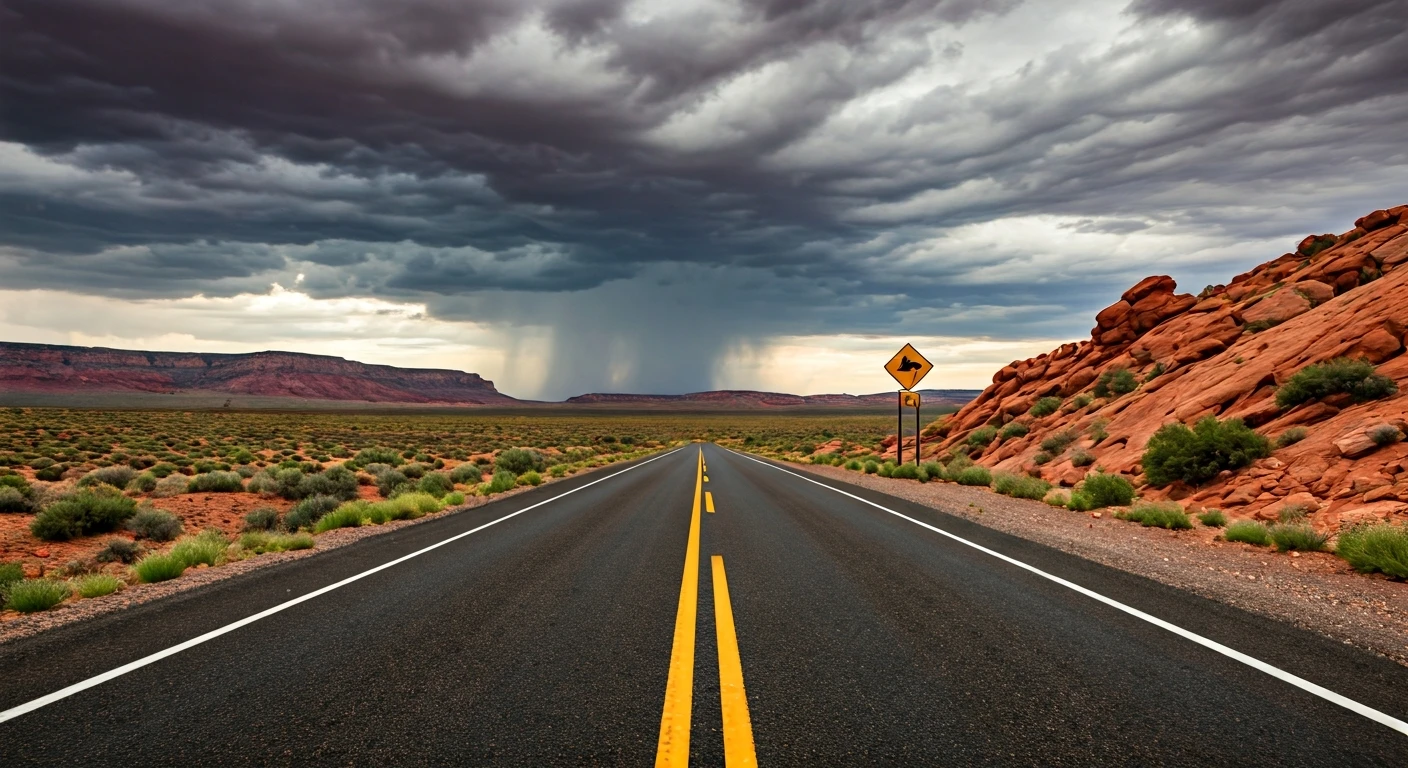
The primary threat during monsoon season isn’t the rain itself, but what it does to the dry, hard-packed desert terrain. Arid landscapes can’t absorb intense downpours quickly, leading to flash floods that can turn a dry wash—a seemingly harmless ditch
or depression in the road—into a raging torrent in minutes. These floods can carry debris, erode roadbeds, and make routes impassable. Even a few inches of moving water can sweep a car off the road. This is why state transportation departments often close roads preemptively or in response to a sudden washout. Understanding this risk is the first step in planning a safer journey; you’re not just avoiding rain, you’re avoiding powerful, unpredictable water flows.
Your Pre-Trip Planning Checklist
Stress-free monsoon travel begins before you even start the car. When mapping your primary route on an app like Google Maps or Apple Maps, take the extra ten minutes to identify potential alternates. Look for parallel state highways or other major paved roads that could serve as a bypass. Avoid relying on unpaved or remote dirt roads, as these are the first to become impassable and often lack cell service. Download offline maps of the entire region you’ll be transiting. Cell service can be spotty in rural areas of Arizona, New Mexico, Utah, and Nevada, and you don’t want to be stuck without navigation if a detour takes you off the main interstate. Finally, check the forecast not just for your destination, but for the entire corridor you'll be driving through.
Build Your Real-Time Digital Toolkit
While pre-planning is crucial, conditions on the ground change rapidly. Your best defense is a suite of real-time information sources. Before you go, bookmark the Department of Transportation (DOT) traveler information websites for the states you’re in. Arizona’s az511.gov and New Mexico’s nmroads.org, for example, provide up-to-the-minute road closure information directly from the source. In your car, run a navigation app like Waze or Google Maps, which use crowdsourced data to report hazards, floods, and closures in real time. Passengers can monitor these apps and official sites, allowing the driver to focus on the road. This combination of official and crowdsourced info gives you the most complete picture of what lies ahead.
On the Road: Heed the Warnings
The most important rule of monsoon driving is simple: never, ever drive through a flooded roadway. It’s the motto of safety campaigns for a reason: “Turn Around, Don’t Drown.” It is impossible to judge the depth of the water or the condition of the road beneath it. That seemingly shallow puddle could be hiding a completely washed-out culvert. If you see a barricade, respect it. It’s there for your safety, not your inconvenience. If you see water flowing across the road, even if it looks minor, stop and find another way. A well-planned backup route gives you the confidence to make this safe choice without feeling trapped or panicked. Your destination is not worth risking your life.
Pack for the Detour
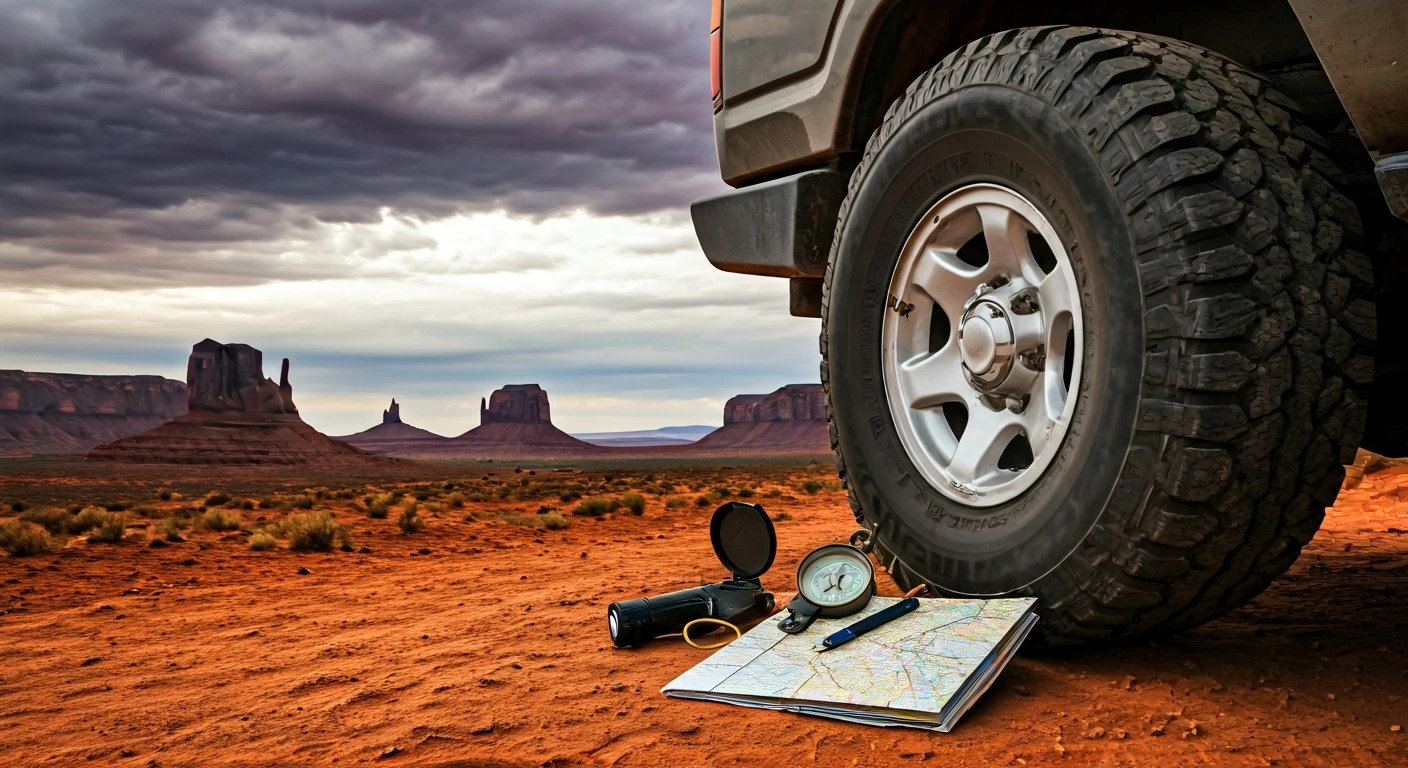
Even a well-planned detour can add hours to your trip. Your car should be prepared for the possibility of a long delay, potentially in an area with no services. Pack an emergency kit that includes extra drinking water (at least one gallon per person), non-perishable snacks, a first-aid kit, a flashlight, and a portable phone charger or power bank. A warm blanket can be useful, as desert temperatures can drop significantly after a storm. Having these supplies on hand removes the anxiety of a long wait. Instead of worrying about being stranded, you’ll have the resources to comfortably wait out a road clearing or take the long way around without added stress.