

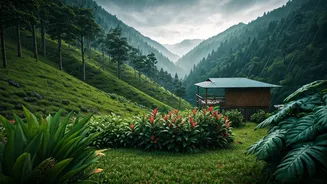
The Mountain Ideal We Know
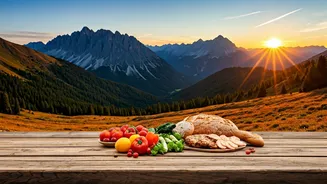
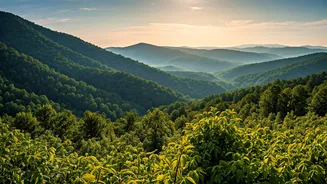
For generations of American travelers, the “hill station” ideal—even if we don’t use the term—has been the gold standard of restorative travel. Think of places like Asheville, North Carolina; Aspen, Colorado; or the serene towns dotting the Catskills.
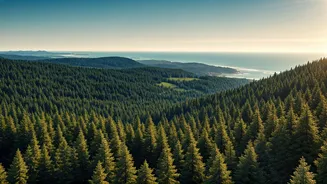
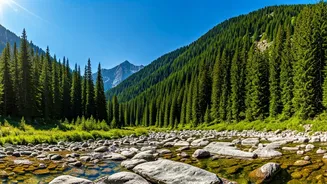
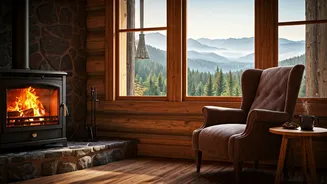
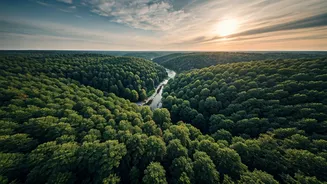
The appeal is elemental and deeply ingrained in our collective imagination. It’s about elevation, trading the oppressive heat and noise of the city for cool breezes and the scent of pine. The days are defined by upward momentum: hiking to a summit, taking a scenic drive along a winding mountain pass, or simply gazing out at a valley from a high-perched deck. Evenings are for drawing inward, gathering around a fireplace as the temperature drops. The dominant feeling is one of expansion and clarity. You go to the mountains to see for miles, to clear your head, to feel small against a backdrop of majestic, solid grandeur.
Enter the Mangrove Labyrinth
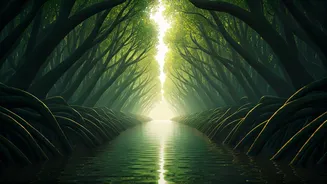
Now, imagine the complete opposite. A mangrove escape is a journey into a world that is dense, wet, and horizontal. Instead of looking up at peaks, you’re looking through a tangled web of prop roots that stitch the land to the sea. The air isn’t crisp; it’s thick with humidity, salt, and the rich, earthy smell of decomposition—the scent of life cycling endlessly. This isn’t the clean, orderly forest of pine and fir. A mangrove forest, or ‘mangal,’ is a chaotic, primordial landscape. It’s a brackish, in-between world where freshwater mixes with salt, and the boundaries between water and land are constantly blurred by the shifting tides. The dominant feeling is not expansion, but immersion. You don’t stand apart from the landscape; you are enveloped by it, navigating its intricate, watery corridors.
A Different Kind of Quiet
Both destinations offer a retreat from urban noise, but the quality of silence is profoundly different. Mountain quiet is often a vast, echoing emptiness, punctuated by the rustle of wind through the trees or the distant call of a hawk. It’s a silence that magnifies your own thoughts. Mangrove quiet is anything but empty. It’s a layered, living soundscape. It’s the gentle lapping of water against your kayak, the startling splash of a fish, the chittering of unseen insects, and the sudden, prehistoric squawk of a wading heron. It’s a quiet that demands you listen outwardly, drawing your attention away from your own internal monologue and into the teeming, subtle life all around you. You find seclusion not through distance, but through concealment within the dense, green maze.
Adventure Reframed
The activities themselves reflect this core difference. Mountain adventures are often about conquering, measuring progress by feet climbed and miles hiked. The reward is the summit view, a tangible achievement. Mangrove adventures are about surrender and observation. The primary mode of transport is a kayak or a small boat, moving slowly through the aquatic labyrinth. The goal isn’t to get to a single destination but to experience the journey itself. You’re scanning the tangled roots for camouflaged crabs, watching for the snout of a manatee breaking the surface, or craning your neck to spot a rare bird perched in the canopy. It’s a less strenuous, more meditative form of exploration, where the greatest rewards are fleeting moments of connection with a complex, hidden ecosystem.
Where to Find This Vibe
While the great mangrove forests of Southeast Asia or the Amazon might feel a world away, this anti-hill-station mood is surprisingly accessible. The most obvious U.S. destination is South Florida. The Everglades National Park and the Florida Keys offer vast expanses of mangrove coastline, easily explored by guided boat tours or solo kayak trips. Here, you can paddle through tunnels in the trees and spend the night in rustic eco-lodges. For an easy international trip, Mexico’s Yucatán Peninsula is home to the Sian Ka’an Biosphere Reserve, a UNESCO World Heritage site where you can float down ancient Mayan canals carved through the mangroves. Similarly, the coasts of Costa Rica offer numerous opportunities to immerse yourself in this unique environment, often from lodges that blend luxury with a deep respect for nature.