




Why June is the Magic Month
While the idea of cutting back a plant that’s finally hitting its stride can feel counterintuitive, June is the perfect time for this crucial act of care. For most plants across the U.S., early summer marks the peak of their active growing season. Their
metabolism is high, sunlight is abundant, and they are primed to heal quickly and push out new, vigorous growth. Unlike a harsh winter prune, which is about survival, a June prune is about shaping and directing a plant’s explosive energy. When you make a cut now, the plant doesn’t just recover; it responds with purpose, redirecting resources to create a fuller, bushier, and often healthier structure. Think of it less as a haircut and more as a session with a personal trainer, pushing your plants to become their best selves before the high heat of late summer sets in.
The Prime Candidates for a Trim
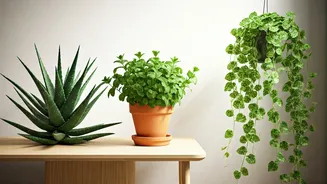
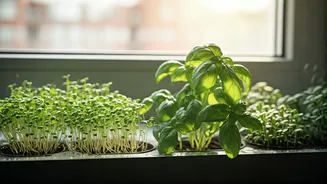
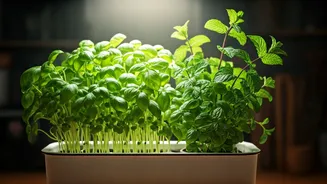
Not every plant in your collection needs the same attention. Focus your efforts on those that will benefit most from a mid-year refresh. Indoors, this is the moment for vining plants like Pothos, Philodendron, and Hoya that have become leggy over the winter, with long, bare stems between leaves. Trimming them back encourages branching from the base for a fuller look. Fast-growing foliage plants like Coleus and many types of Fiddle Leaf Figs also respond well to being shaped now. Outside, June is the time to prune spring-flowering shrubs like lilacs, forsythia, and rhododendrons *after* they’ve finished blooming. Pruning them now allows them to recover and develop the buds they’ll need for next year’s floral show. It’s also an ideal time to regularly pinch back herbs like basil and mint to prevent them from flowering and encourage bushy, leafy growth for your kitchen.
Define Your Pruning Goals
Before you pick up the shears, ask yourself what you want to accomplish. Your goal determines your technique. 1. **Pruning for Health:** This is the most basic and essential type. Your goal is to remove any dead, damaged, or yellowing leaves and stems. These parts are a drain on the plant’s energy and can attract pests. This can be done any time of year, but it’s a great first step for any June pruning session. 2. **Pruning for Size and Shape (Heading Cuts):** This is about control and aesthetics. To shorten a stem or encourage branching, make a “heading cut” by snipping the tip of a branch just above a leaf node (the small bump where a leaf emerges). The plant will respond by activating dormant buds below the cut, often resulting in two new stems growing where there was once one. 3. **Pruning for Bushiness (Pinching):** For smaller, softer-stemmed plants and herbs, “pinching” is the way to go. Simply use your thumb and forefinger to pinch off the very tip of a main stem. This removes the apical bud, which produces hormones that suppress growth on the sides of the plant. Removing it encourages the plant to grow outward instead of just upward.
Tools and Technique: The Golden Rules
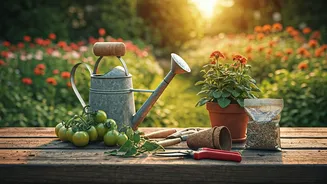
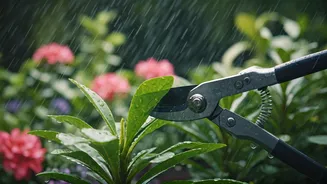
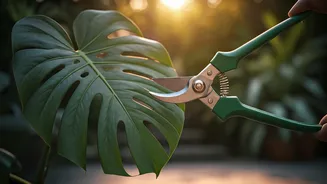
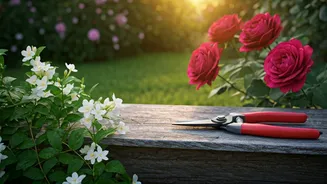
Good pruning hygiene is non-negotiable. First, always use clean, sharp tools. A pair of bypass pruners (where the blades slide past each other like scissors) is perfect for woody stems, while smaller snips or even clean scissors work for houseplants. Wipe your blades with rubbing alcohol between plants to prevent the spread of any potential diseases. Second, follow the “one-third rule” as a general guideline: never remove more than one-third of the plant’s total mass at one time. This ensures the plant retains enough foliage to photosynthesize and recover effectively. Finally, be decisive. Make clean, angled cuts just above a leaf node or a side branch. A clean cut heals faster and is less susceptible to infection than a ragged tear.
Who Gets a Pass? Plants to Leave Alone
Just as important as knowing what to prune is knowing what *not* to. The most critical group to avoid pruning in June are shrubs that bloom on old wood and have not yet flowered. This includes certain varieties of hydrangea (like Oakleaf and Bigleaf) and some azaleas. Pruning them now would mean cutting off the flower buds that are developing for this summer's display. The general rule is simple: if it blooms in spring, prune it right after it flowers. If it blooms in summer, it’s generally safe to prune in late winter or early spring before new growth appears. When in doubt, a quick search for your specific plant’s pruning schedule can save you a year of disappointment.