


Why Simple Is Suddenly Chic
For years, American diners often associated Indian cuisine with rich, complex, restaurant-style curries like butter chicken or lamb vindaloo—delicious, but not exactly everyday wellness fare. The current trend, however, pivots away from celebratory dishes
and toward the humble, daily meals that have nourished millions across the Indian subcontinent for centuries. This shift is resonating for a few key reasons. First, there's a growing fatigue with restrictive, complicated wellness diets. People are craving food that is both nourishing and comforting. Second, these simple pairings are often naturally gluten-free, easily made vegan, and incredibly budget-friendly. They align perfectly with modern desires for plant-forward, sustainable eating without the hefty price tag of niche wellness products. Finally, they are rooted in ancient dietary wisdom, like Ayurveda, which emphasizes balance, digestion, and whole foods—concepts that are now mainstream in the U.S. health community.
1. Dal and Rice: The Original Power Bowl
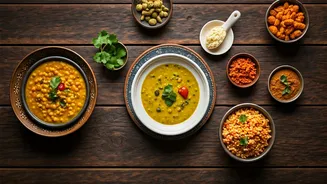
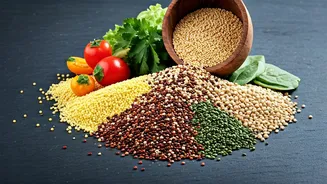
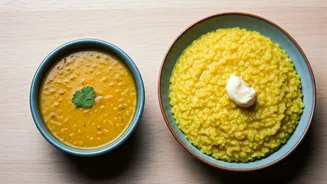
At the heart of this trend is the iconic pairing of dal (lentil stew) and chawal (rice). This isn't just a comfort food staple; it's a nutritional masterpiece of simplicity. Legumes like lentils are rich in protein but lack certain essential amino acids that grains like rice possess. When eaten together, they form a 'complete protein,' providing all nine essential amino acids your body needs, similar to what you'd get from meat or dairy. It's the plant-based protein hack that has existed for millennia. On social media, you’ll see influencers touting a simple bowl of masoor dal (red lentils) and fluffy basmati rice as the ultimate gut-friendly, easy-to-digest meal. It’s warm, satisfying, and endlessly variable—you can temper it with different spices (a process called 'tadka') to create wildly different flavor profiles from the same basic ingredients.
2. Khichdi: The Ultimate Wellness Reset
If dal and rice are the daily workhorse, khichdi is the restorative hero. A one-pot dish made by cooking rice and lentils (usually moong dal) together until soft, khichdi is the quintessential Indian comfort and recovery food. It’s what people eat when they’re feeling under the weather, but its wellness applications go far beyond that. Because it’s so easy to digest, it’s considered a cornerstone of Ayurvedic dietary 'resets' or 'cleanses,' designed to give the digestive system a break while still providing ample nourishment. Wellness influencers are reframing it for a Western audience as a savory, healing porridge. It’s a gentle, warming meal that can be made as simple or complex as you like, often seasoned with just turmeric and ginger or loaded with seasonal vegetables for a complete, balanced meal in a single bowl.
3. Roti and Sabzi: The Everyday Balanced Plate
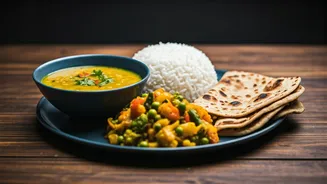
Move over, sad desk salad. The Indian 'tiffin' or lunchbox staple of roti (whole wheat flatbread) and sabzi (a cooked vegetable dish) is being embraced as a template for a perfectly balanced meal. The formula is simple and brilliant: a whole-grain carbohydrate for energy, paired with a fiber- and vitamin-rich vegetable dish. The sabzi can be anything from spiced potatoes (aloo), cauliflower (gobi), or okra (bhindi) to a simple mix of whatever is in season, sautéed with classic Indian spices like cumin, coriander, and turmeric. This pairing encourages eating a variety of vegetables and avoids the monotony that can derail healthy eating habits. It’s inherently portion-controlled and customizable, teaching a principle of balance rather than restriction. On wellness feeds, it’s presented as an intuitive way to 'eat the rainbow' without overthinking it.