






The Philosophy of Stillness
Before a single stone is placed, it helps to understand the 'why' behind a Zen garden. Known in Japan as Karesansui, or 'dry landscape,' these gardens are not meant for walking through but for quiet contemplation. They are miniature, stylized landscapes
that use carefully arranged rocks, sand, and minimal plants to represent natural scenes like mountains, islands, and water. The goal isn't to replicate nature perfectly but to capture its essence, creating a space that encourages mindfulness, calms the spirit, and offers a profound sense of tranquility. It's a landscape of suggestion, where your mind fills in the details.
The Foundation: Gravel and Pebbles
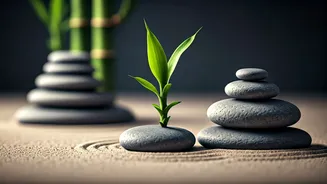
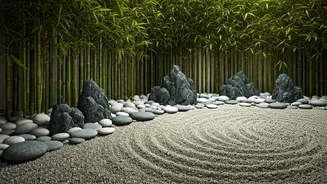
The most iconic feature of a Zen garden is the expanse of raked gravel or sand. This element, often using crushed granite, small pebbles, or coarse sand, symbolizes water. The act of raking it into patterns—a practice called samon—is a meditative exercise in itself. Rippling lines can represent waves in an ocean, while straight lines evoke the feeling of calm, still water. For a home garden, choose a material that is heavy enough to stay in place and not blow away. Gray or off-white gravel in a size of 1/4 to 3/8 inch is a popular and practical choice. To begin, clear and level the designated area, lay down a weed barrier, and spread a two-to-three-inch layer of your chosen pebbles.
The Bones: Arranging Stones and Boulders
If gravel is the water, then larger rocks are the 'bones' of the garden. These stones, or ishigumi, represent islands, mountains, or even celestial beings. Their placement is the most critical and artistic part of the process. The key is to create a sense of naturalness and asymmetry. Avoid perfect symmetry or placing rocks in a straight line. Instead, arrange them in odd-numbered groups of three, five, or seven. Vary their sizes and shapes, and partially bury the largest stones to give them a sense of permanence, as if they’ve been there for centuries. A common arrangement is a triad of one tall, upright stone flanked by two smaller, supporting stones, representing a central mountain peak.
The Living Element: Choosing Bamboo
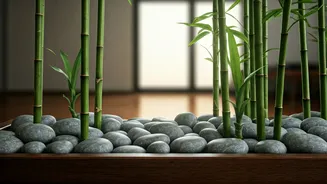
While many Zen gardens are plant-free, bamboo adds a vital, living element that introduces height, sound, and texture. Its slender, vertical form contrasts beautifully with the horizontal plane of the gravel and the solid mass of the rocks. The gentle rustling of its leaves in the wind provides a natural, calming soundtrack. However, choosing the right bamboo is non-negotiable. You must select a 'clumping' variety, not a 'running' one. Running bamboo is notoriously invasive, sending out underground rhizomes that can quickly take over your garden and your neighbor's. Clumping varieties, like those from the Fargesia genus, grow in a tight, manageable cluster. Use it as a backdrop, to screen an unsightly view, or as a single, elegant specimen plant.
Bringing It All Together
Creating your Zen garden is an exercise in balance and restraint. Embrace the concept of yohaku, or 'empty space,' as it's just as important as the elements you include. Don't feel the need to fill every corner. A single, well-placed boulder in a field of raked gravel can have more impact than a dozen cluttered features. Start small—even a corner of a patio or a large, shallow container can become a miniature Karesansui. Let the process be slow and deliberate. Move stones around, try different raking patterns, and observe how the light interacts with the textures throughout the day. The garden is never truly 'finished'; it's a living piece of art that evolves with you.