
From Holiday Cookies to Haute Cuisine
Not long ago, fine dining was a world of hushed tones, rigid rules, and ingredients prized for their obscurity and price tag. Flavors associated with mass-market coffee drinks or grandma's cookie jar were considered, at best, unsophisticated. But a noticeable
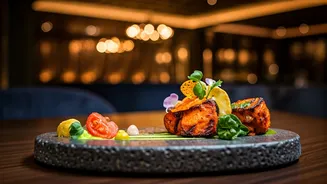
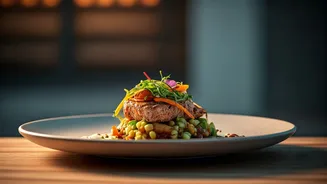
shift is underway. At progressive restaurants from New York to Los Angeles, chefs are deconstructing and elevating the very flavors we associate with cozy, festive moments. Imagine a foie gras torchon infused with the subtle warmth of gingerbread spice, a delicate scallop crudo brightened with a cranberry-gin gel, or a complex, savory lamb dish served with a purée that whispers of pumpkin spice—not the saccharine latte, but the actual blend of cinnamon, nutmeg, and clove. This isn't about novelty for novelty's sake; it's a deliberate creative choice to find new expressions in familiar notes.
A Deep Craving for Comfort
So, why now? The most compelling answer lies in our collective psyche. In the wake of years of uncertainty and disruption, diners are seeking more than just technical brilliance on a plate; they’re seeking comfort, connection, and a touch of joy. Nostalgia has become a powerful currency. Fine-dining establishments, once bastions of cool intellectualism, are recognizing that emotional resonance is a key part of the luxury experience. By tapping into the flavor memories of the holidays—a time of year culturally coded with warmth, family, and generosity—chefs can create a more immediate and profound bond with their guests. Serving a dish that evokes a happy memory of a childhood winter isn't just feeding a customer; it's offering a moment of genuine comfort, a feeling that can be more satisfying than the rarest truffle.
The New Definition of Luxury
This trend also signals a broader redefinition of what constitutes luxury in the 21st century. For decades, luxury was about exclusivity and scarcity—caviar from the Caspian Sea, white truffles from Alba. While those ingredients still have their place, a new school of thought suggests that true luxury lies in transformation and execution. The real flex for a world-class chef is not merely serving an expensive ingredient, but taking a common, even 'basic' flavor profile and elevating it into something sublime. It demonstrates a higher level of skill to transform the humble pumpkin spice blend into a balanced, elegant component of a savory dish than it does to simply slice a truffle. This approach democratizes flavor while elevating craft, proving that the value is in the artist's hand, not just the raw material.
Not Your Barista's Peppermint Mocha
It's crucial to differentiate what's happening in these kitchens from the commercialized versions of festive flavors. When a Michelin-starred chef uses 'peppermint,' it's not a cloying syrup. It might be a house-made oil from fresh heirloom mint, used to cut the richness of a dark chocolate dessert, or a cryo-distilled essence that provides a clean, cooling finish to a palate-cleansing sorbet. The 'egg nog' on a fine-dining menu might be a delicate, aerated foam, capturing the spirit of nutmeg and cream without the heaviness. These chefs are isolating the core components of what makes these flavors appealing—the warmth, the spice, the cooling sensation—and deploying them with surgical precision. It's an exercise in subtlety and balance, the very antithesis of the one-note sweetness that defines their mass-market counterparts.