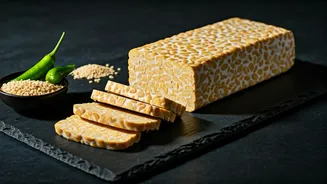









Meet Tempeh, Tofu's Heartier Cousin
Before you can cook it, it helps to know what you’re working with. Unlike tofu, which is made from soy milk, tempeh is a firm, sliceable cake made from whole, cooked soybeans that have been fermented. Originally from Indonesia, this process binds the
beans together with a dense, white mycelium (the same family of organism as mushrooms), resulting in a pleasantly nutty, savory, and slightly earthy flavor. Its texture is the real star: dense, chewy, and substantial. Where extra-firm tofu can sometimes crumble or feel soft, tempeh holds its shape beautifully, making it a fantastic and satisfying stand-in for meat in many dishes.
Why the Stir-Fry Is Its Perfect Stage
So, why is a stir-fry the ideal introduction? Three words: high, direct heat. A stir-fry is a fast, dynamic cooking environment that plays to all of tempeh’s strengths. When cut into thin strips or small cubes and seared in a hot, lightly oiled pan, tempeh undergoes a magical transformation. The exterior becomes deeply golden-brown and wonderfully crispy, creating an irresistible textural contrast with its firm, chewy interior. It doesn't fall apart or release excess water and steam your vegetables, a common pitfall with improperly prepared tofu. Instead, it provides a solid, protein-packed foundation that can stand up to bold sauces and crunchy vegetables, absorbing flavor without turning to mush.
The One Trick to Unlock Great Flavor
If you’ve ever tried tempeh and found it slightly bitter, you’re not alone. This is a common experience, but it’s also incredibly easy to fix. The single most important step for better tempeh is to steam or simmer it before you do anything else. This simple, five-minute process does two things: it gently removes any bitter notes left over from the fermentation process, and it softens the tempeh slightly, opening up its structure to better absorb marinades. Simply place the whole block in a saucepan with enough water to cover it, bring to a boil, then reduce to a simmer for about 5 to 8 minutes. You can also place it in a steamer basket. Afterward, pat it dry, and it’s a blank canvas ready for flavor.
Mastering the Marinade
Once steamed, tempeh acts like a sponge. This is where the fun begins. Because it’s going into a stir-fry, you don’t need a long marinating time—15 to 20 minutes is plenty. A classic stir-fry marinade formula works perfectly here. Aim for a balance of salty, sweet, and acidic. A great starting point is a mix of soy sauce or tamari (salty), maple syrup or a touch of brown sugar (sweet), rice vinegar (acidic), and sesame oil for nutty richness. Finely grated ginger and garlic are almost always welcome additions. Toss your steamed, dried, and sliced tempeh in this mixture and let it sit while you prep your vegetables. The tempeh will soak up those flavors, ensuring every bite is delicious.
The Stir-Fry Method for Success
With your tempeh prepped, the final execution is simple. First, sear the tempeh. Get your wok or skillet hot, add a neutral oil with a high smoke point, and cook the marinated tempeh pieces in a single layer. Let them sit for a few minutes without moving them to develop a deep, golden crust. Flip and sear the other side, then remove the tempeh and set it aside. Next, stir-fry your vegetables—broccoli, bell peppers, snap peas, onions—until crisp-tender. Finally, add the tempeh back to the pan along with any remaining marinade or sauce, and toss everything together until the sauce thickens and coats every ingredient. Serve immediately over rice or noodles.