




The Urban Heat Island Trap
There’s a scientific reason your city feels like an oven: the Urban Heat Island effect. Unlike a natural landscape, which absorbs and transpires moisture to cool itself, a city is a dense collection of materials that do the opposite. Asphalt roads, dark
rooftops, and concrete buildings soak up the sun’s radiation all day long. Instead of releasing it, they hold onto that heat, continuing to radiate it back out long after sunset. Add to this the waste heat pumped out by millions of air conditioning units, cars, and industrial processes, and you get an environment that can be anywhere from 2 to 10 degrees Fahrenheit warmer than its surrounding rural areas. It’s not just in your head; the city is actively cooking itself, and you’re stuck in the middle of the skillet.
The Altitude Advantage
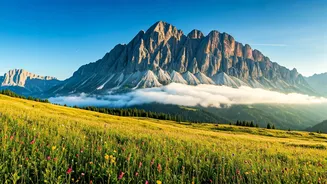
Meanwhile, the mountains have a built-in cooling system, and it’s all about physics. The primary rule is the environmental lapse rate: for every 1,000 feet you ascend, the temperature drops by about 3.5 to 5.5 degrees Fahrenheit. This isn't just a quaint piece of trivia; it’s a game-changer. A 95-degree day in Denver (elevation 5,280 feet) might correspond to a perfect 78-degree day in a nearby mountain town at 10,000 feet. The air at higher altitudes is less dense, meaning there are fewer molecules to trap and hold heat. The sun can feel intense, yes, but it's a clean, direct warmth that doesn’t linger in the same oppressive way. The moment you step into the shade of a pine tree, the relief is immediate and profound.
Humidity: The Real Villain
Heat is one thing, but heat combined with humidity is the true recipe for misery. Our bodies cool down by sweating, which evaporates and carries heat away from the skin. But when the air is already saturated with moisture—as it often is in coastal cities like New York or southern hubs like Houston—that sweat has nowhere to go. It just sits on your skin, making you feel sticky, gross, and even hotter than the thermostat reading suggests. This is where mountain air delivers its knockout punch. Higher, cooler air is almost always drier. That low humidity means your body's natural cooling mechanism works flawlessly. A 90-degree day in the Rockies feels dramatically more comfortable than an 85-degree day in Washington, D.C., precisely because the air isn’t a thick, wet blanket.
The Nighttime Reset Button
Perhaps the most significant difference reveals itself after dark. In a city plagued by the heat island effect, nighttime brings little relief. Buildings and pavement continue to radiate the day's accumulated warmth, keeping temperatures uncomfortably high. You’re forced to run the AC all night, waking up to a massive energy bill and air that feels stale and recycled. In the mountains, the script is flipped. Once the sun goes down, the thin, dry air releases its heat rapidly. Temperatures plummet, often by 30 degrees or more. That scorching afternoon gives way to a crisp, cool evening perfect for sitting around a fire pit. You can throw open the windows, breathe in fresh, pine-scented air, and pull a blanket over you for a restorative night's sleep. It's a natural, daily reset that city dwellers can only dream of.