






A Generation Shaped by Crisis
To understand Gen Z’s financial mindset, you have to look at the world that raised them. Born between the late 1990s and early 2010s, their formative years were bookended by economic turmoil. They watched their parents navigate the 2008 Great Recession
and saw firsthand as their older Millennial siblings graduated into a weak job market, saddled with historic levels of student debt. This wasn't a distant economic theory; it was a kitchen-table reality. The result is a generation hardwired with a healthy dose of financial skepticism and a pragmatic approach to money. They aren't necessarily pessimistic, but they are profoundly realistic, viewing financial stability not as a given, but as something to be actively built and protected from day one.
Saving Isn't Optional, It's Instinct
While older generations were often told to start saving for retirement in their late twenties, many in Gen Z are starting far earlier. Surveys consistently show they prioritize saving a portion of their income. A 2023 Bank of America report found that 73% of Gen Zers are actively saving, and many are doing so with clear goals in mind. For them, a robust emergency fund isn't a 'nice-to-have'; it's a non-negotiable buffer against the unexpected. This proactive saving habit extends beyond just emergencies. They are also saving for major life goals like homeownership and even early retirement, a concept that seems to be entering the conversation at a younger age than ever before. This disciplined approach is a direct rejection of a consumption-first lifestyle.
A Calculated Aversion to 'Bad' Debt
Gen Z has a complicated relationship with debt. They've seen how student loans have burdened Millennials, leading many to question the automatic assumption that a four-year degree is the only path to success. They are more likely to weigh the return on investment of a college education, explore trade schools, or choose less expensive state schools. When it comes to consumer debt, they are particularly wary. Having grown up with buy-now-pay-later services and digital wallets, they are more accustomed to seeing money as a finite digital number rather than an abstract line of credit. This makes them more cautious about racking up high-interest credit card balances. They aren't entirely anti-debt—they understand the need for mortgages or business loans—but they are deeply allergic to what they perceive as 'unproductive' or 'bad' debt.
The Digital-First Investor
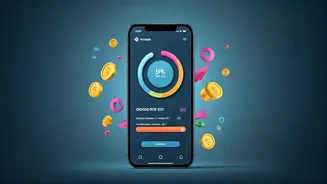
This is the first generation to enter adulthood with frictionless, zero-commission investing apps in their pocket from the start. Platforms like Robinhood, Acorns, and Fidelity Go have democratized market access, and Gen Z has embraced it. While some have been drawn to the volatility of meme stocks and cryptocurrency, a significant portion is using these tools for long-term, goal-oriented investing. They are comfortable with the concept of dollar-cost averaging through automated deposits into ETFs and index funds. This early start, even with small amounts, gives them a massive advantage thanks to the power of compound interest. Their portfolio might be a mix of traditional stocks and more speculative digital assets, but the core behavior is one of engagement and a desire to make their money work for them.
Learning from 'Fin-fluencers'
Gen Z's financial education isn't coming from a stuffy bank advisor; it's coming from TikTok, YouTube, and Instagram. A new wave of 'fin-fluencers' (financial influencers) has emerged, breaking down complex topics like Roth IRAs, tax-loss harvesting, and high-yield savings accounts into bite-sized, engaging videos. This peer-to-peer learning model has made financial literacy more accessible than ever. Of course, it’s a double-edged sword. For every credible, well-researched creator, there's another peddling risky get-rich-quick schemes. The savviest members of Gen Z are learning to be discerning consumers of information, cross-referencing advice and understanding that there's no substitute for due diligence. They value authenticity and transparency, preferring relatable creators who share both their wins and losses.