





So, What Is Star Bathing?
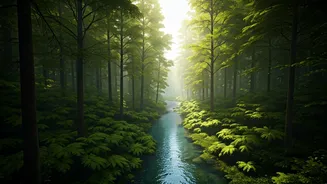
If the term “star bathing” sounds familiar, it’s likely because it follows the blueprint of its popular predecessor, “forest bathing.” Inspired by the Japanese practice of *shinrin-yoku*, forest bathing is the art of mindfully immersing yourself in a woodland
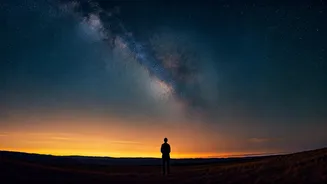
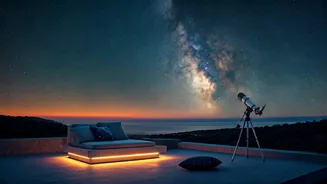
environment. Star bathing applies the same principle to the night sky. This isn't your childhood astronomy club, where the goal was to identify constellations or track meteor showers. Instead, star bathing is about the sensory experience of being under a vast, dark sky. It’s about putting away the telescope and the phone, and simply allowing yourself to be present with the cosmos. It’s less about scientific observation and more about quiet contemplation, letting the sheer scale of the universe wash over you and put your daily anxieties into perspective.
The Soothing Science of Awe
The appeal of star bathing goes beyond poetic sentiment; it’s grounded in real psychological benefits. Researchers have extensively studied the emotion of “awe,” the feeling we get when confronted with something vast, beautiful, and difficult to comprehend—like a star-filled sky. Experiencing awe has been linked to increased feelings of generosity, humility, and well-being, while decreasing stress and mental chatter. Staring up at the Milky Way, a galaxy containing hundreds of billions of stars, is a reliable shortcut to that feeling. Furthermore, the practice encourages a digital detox. By intentionally seeking out true darkness, away from the blue light of our screens and the glare of city life, we allow our bodies to realign with their natural circadian rhythms. This can promote better sleep and reduce the mental fatigue associated with being perpetually online.
How to Practice It Yourself
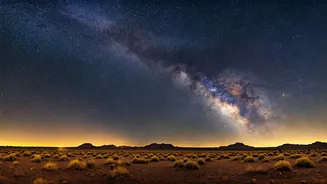
The beauty of star bathing is its simplicity. You don’t need special equipment or extensive training. The first step is to find a location with minimal light pollution. While a designated Dark Sky Park is ideal, a quiet rural field, a remote beach, or even a suburban backyard can work if you give your eyes time to adjust. Dress warmly and bring a blanket or a comfortable chair. The key is to eliminate distractions. Put your phone on silent and store it away. For the first 15 to 20 minutes, just allow your eyes to adapt to the darkness. Notice the shift as more and more stars become visible. Focus on your senses. What can you hear in the quiet of the night? What does the air feel like on your skin? Resist the urge to name constellations or 'do' anything. Your only job is to be there and look up.
The Rise of Astro-Tourism
This renewed appreciation for the night sky has fueled a boom in “astro-tourism.” More travelers are actively seeking out destinations renowned for their pristine nightscapes. The International Dark-Sky Association (IDA) has officially certified over 200 parks, reserves, and communities around the world dedicated to preserving natural darkness. In the U.S., places like Big Bend National Park in Texas, Death Valley National Park in California, and Headlands International Dark Sky Park in Michigan have become havens for star bathers. Hotels and resorts in these areas are responding, offering stargazing lounges, guided night walks, and even “celestial concierges.” This isn’t about adrenaline-pumping adventure; it’s the pinnacle of “slow travel,” a movement that prioritizes connection and rest over a packed itinerary.