






So, What Exactly Is It?
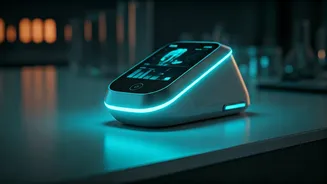
At its core, metabolic testing is a way to measure your body’s unique engine. Instead of relying on generalized formulas you’d find online, these tests analyze your breath to get a precise snapshot of your metabolism. There are two main types you’ll see
popping up in boutique gyms and wellness clinics. The first is Resting Metabolic Rate (RMR) testing. For this, you simply relax and breathe into a tube connected to a machine for about 15-20 minutes. The device measures the oxygen you consume and the carbon dioxide you exhale to calculate the exact number of calories your body burns at complete rest. It’s the baseline energy required just to keep your organs functioning. The second, more intense version is the VO2 Max test. This one’s for fitness performance. You’ll run on a treadmill or pedal a stationary bike while wearing a mask, gradually increasing the intensity until you hit your limit. The test measures your body’s maximum ability to utilize oxygen during exercise, which is a key indicator of cardiovascular fitness.
The 'Why Now?' Factor
Metabolic testing isn’t new technology, but its migration from clinical labs to consumer wellness is. The shift is driven by a perfect storm of cultural trends. First, there’s a widespread fatigue with restrictive, generic diet culture. People are tired of being told to eat 1,200 calories a day without any scientific basis for that number. Second, the rise of the “quantified self” movement—powered by wearables like the Oura Ring, Whoop, and Apple Watch—has made us hungry for personal data. We track our sleep, our steps, and our heart rate variability; tracking our metabolic function feels like the logical next step. It’s the ultimate expression of bio-individuality, promising a health plan engineered specifically for your body, not for the masses. In cities where wellness is both a hobby and a status symbol, shelling out for this level of personalization has become the new juice cleanse.
What the Experience Is Really Like
For most people, the entry point is an RMR test, and it’s surprisingly low-key. The biggest hurdle is the prep: you typically have to fast for 8-12 hours beforehand and avoid caffeine and strenuous exercise to ensure a true “resting” measurement. You’ll arrive at a clinic or a high-end gym, get comfortable in a quiet room, and a technician will fit you with a mask or have you breathe through a disposable mouthpiece. It can feel a little strange, like a low-budget sci-fi movie, but it’s painless. You just sit back and breathe normally. The VO2 max test is the opposite of relaxing. It's a full-on physical challenge designed to push you to exhaustion. It’s not for the faint of heart, but for serious runners, cyclists, and fitness enthusiasts, it provides invaluable performance data you can’t get anywhere else. In both cases, the experience is quick, clinical, and focused on gathering your unique biological information.
The Data You Get (And What To Do With It)
This is where the magic happens. After an RMR test, you don't just get a number; you get a metabolic fingerprint. A practitioner will typically walk you through the results, explaining your precise daily calorie needs for maintenance, weight loss, or muscle gain. For many, the results are eye-opening. Some find their metabolism is much faster than they assumed, freeing them from overly restrictive eating. Others discover it’s slower, explaining why generic calorie goals haven’t worked. With this data, a nutritionist or trainer can help you build a sustainable eating plan without the soul-crushing guesswork. For a VO2 max test, the report provides your specific heart rate training zones. Instead of guessing what “moderate intensity” means for you, you’ll know the exact beats-per-minute to stay in for optimal fat burning, endurance building, or high-intensity interval training (HIIT). It turns your workout from a vague effort into a precision-targeted mission.
The Catch: Cost and Accessibility
Before you rush to book an appointment, there’s the reality of price and access. This level of personalization doesn’t come cheap. A standalone RMR test can run anywhere from $150 to $300, while a VO2 max test is often in the $200 to $400 range. These services are typically not covered by insurance, positioning them firmly as a luxury wellness expense. For now, they’re mostly found in major metropolitan areas at specialized performance labs, upscale fitness centers like Equinox, and the offices of forward-thinking dietitians. While the cost is a significant barrier, proponents argue it’s a one-time investment that can save years of frustration and money spent on ineffective plans and products. It’s a tool for those who are serious about optimizing their health and have the disposable income to invest in premium data.