

The Fortress Asleep
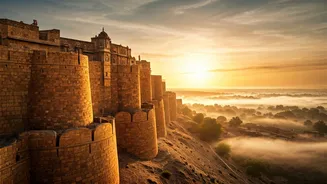
In the pre-dawn gloom, Jaisalmer Fort is a colossal silhouette against a deep indigo sky. Known as Sonar Quila, or the Golden Fort, its massive walls and bastions—built from a distinctive yellow sandstone—are still sleeping. This isn’t a ruin or a museum
piece; it’s one of the world’s last “living forts,” home to thousands of residents whose ancestors have lived within these walls for generations. Before the first light, you can feel the weight of that history. The silence is profound, broken only by the whisper of the wind swirling around the 99 turrets. The cobblestone paths, worn smooth by nearly a millennium of footfalls, are empty. It’s a rare moment of solitude in India, a chance to connect with the structure not as a tourist attraction, but as the colossal, slumbering titan it is.
The First Glimmer of Gold
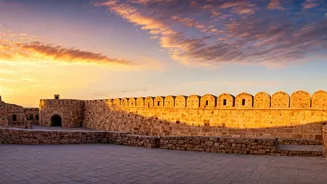
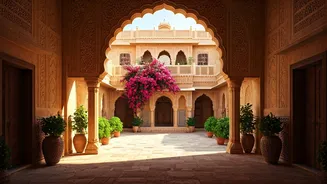
Then, it begins. A sliver of pale orange emerges from the edge of the Thar Desert. The magic of a Jaisalmer sunrise isn’t a sudden explosion of color but a slow, painterly transformation. The first rays of sun don’t just illuminate the fort; they seem to awaken it from within. The pale, sandy-colored stone begins to blush, shifting through shades of soft rose to a brilliant, honeyed gold. Long, dramatic shadows stretch across the courtyards and ramparts, carving the intricate details of the havelis (ornate private mansions) and Jain temples into sharp relief. This is why it’s called the Golden Fort. The sandstone absorbs the light, appearing to glow with its own internal fire. Standing on a cannon point, looking out as the light washes over the ancient stone, feels less like watching a sunrise and more like witnessing a slow-motion act of creation.
A Living City Awakens
As the light deepens, the fort’s true character begins to reveal itself. The silence gives way to the first stirrings of life. From the labyrinthine alleys below, new sounds drift up: the distant, melodic chime of a temple bell, the metallic clank of a shop shutter being raised, the sizzle of oil as the first batch of samosas hits a pan. You might hear the faint murmur of morning prayers or the cheerful call of a chai wallah making his first delivery. These aren't sounds put on for show; they are the authentic soundtrack of a city waking up. This is the moment you realize the dreaminess of the walk isn’t just about the beautiful light. It’s about the privilege of watching a medieval citadel seamlessly transition into a modern, breathing community, a rhythm that has played out every morning for over 800 years.
The View from the Top of the World
From your perch on the ramparts, the view is spectacular. The entire city of Jaisalmer, also built from the same golden stone, sprawls out below, a sea of ochre and sand that blends perfectly into the surrounding landscape. In the morning light, the city looks like a miniature, handcrafted model. Beyond the city limits, the great Thar Desert stretches to infinity, its dunes appearing as soft, undulating waves in the early glow. You can see the windmills in the distance, modern sentinels in an otherwise timeless landscape. The sheer scale of the view reinforces the fort’s strategic importance. For centuries, it was a vital outpost on the camel-train routes, a bastion of power and wealth rising from the unforgiving desert. The sunrise illuminates not just the beauty, but the very purpose of this incredible place.