




Welcome to India’s Coffee Country
Deep in the Western Ghats mountain range of Karnataka, India, lies Chikmagalur, a region whose name translates to “Younger Daughter’s Town.” Legend says it was given as dowry to the younger daughter of a local chief, but today its riches are of a different
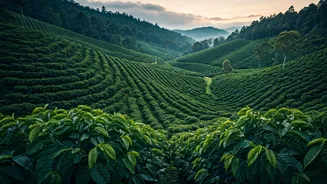
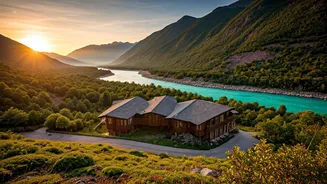
sort: acres upon acres of rolling green coffee estates. This isn't just any coffee region; it's considered the birthplace of coffee in India, where the first seeds were supposedly planted in the 17th century. The landscape is a painter's palette of greens, shrouded in mist for much of the year. The air is thick with the scent of coffee blossoms, black pepper, and damp earth. Waterfalls cascade down hillsides, and narrow roads wind through dense canopies. It’s a world away from the bustling chaos of India’s megacities, and increasingly, a world away from the hyper-connectivity of modern life.
The Rise of the Unplugged Honeymoon
For generations, the quintessential honeymoon involved a tropical beach, umbrella drinks, and maybe a jet ski. But for a growing number of newlyweds, particularly millennials and Gen Z, the ultimate luxury isn't extravagance—it's presence. After the logistical marathon of planning a wedding, many couples are seeking a deliberate slowdown, a chance to connect with each other without the constant interruption of emails, social media feeds, and the 24-hour news cycle. This is the core appeal of the “unplugged” honeymoon. It’s a conscious choice to prioritize conversation over content creation and shared experiences over shareable moments. In places like Chikmagalur, spotty cell service isn't a bug; it's a feature. The goal is to start a marriage on a foundation of quiet intimacy, trading digital noise for the sounds of nature and rediscovering the art of being fully present with another person.
A Note on 'Plantation' Stays
For American ears, the word “plantation” carries the heavy and painful weight of slavery and systemic brutality. It's essential to understand that in the Indian context, the term has a different, though also complex, history. Here, a plantation refers to a large estate dedicated to cultivating crops like coffee, tea, or spices. These estates are often legacies of British colonial rule, and their history is entwined with colonialism and labor exploitation, but not the system of chattel slavery that defined the American South. Today, many of these historic properties have been converted into boutique hotels and homestays, often run by the families who have managed the land for generations. Staying in one is less about historical reenactment and more about experiencing the agricultural rhythm of the region, surrounded by a working landscape.
More Than Just a Pretty View
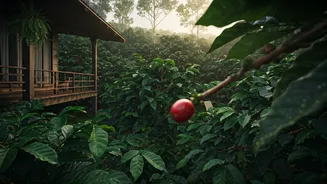
A day on a Chikmagalur coffee estate unfolds slowly. You wake to the sound of birds, not an alarm, with mist clinging to the windows. A typical morning might involve a guided walk through the coffee bushes, learning to distinguish Arabica from Robusta plants and watching workers meticulously hand-pick ripe red coffee cherries. Afternoons are for napping, reading a book on a wide veranda, or exploring nearby spice gardens. The experience is deeply sensory. It’s the taste of fresh, locally sourced food, often cooked in the regional Malnad style. It’s the rich aroma of a “cupping” session, where you learn to taste coffee like a connoisseur. It’s the feeling of cool air on your skin during an evening stroll. With no Wi-Fi to distract, couples find themselves talking for hours, playing board games, or simply sitting in comfortable silence, watching the rain fall. It’s a return to a simpler, more analog way of being.