






What is Rath Yatra?
Rath Yatra, which translates to “Chariot Journey,” is one of the world's oldest and largest annual religious festivals. Centered in the coastal city of Puri, it honors Lord Jagannath, a revered form of the Hindu deity Vishnu. What makes this event so
unique is that it’s the one time of year when the temple deities—Lord Jagannath, his elder brother Balabhadra, and his sister Subhadra—are brought out of the inner sanctum of the famous Jagannath Temple. Placed on three colossal, ornate wooden chariots, they embark on a public procession to the Gundicha Temple, about two miles away, considered their aunt's home. It’s a divine vacation, and the entire state comes out to participate.
The Sheer Scale of Devotion
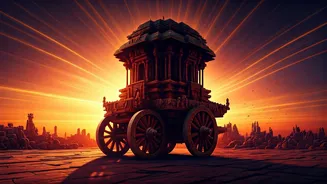
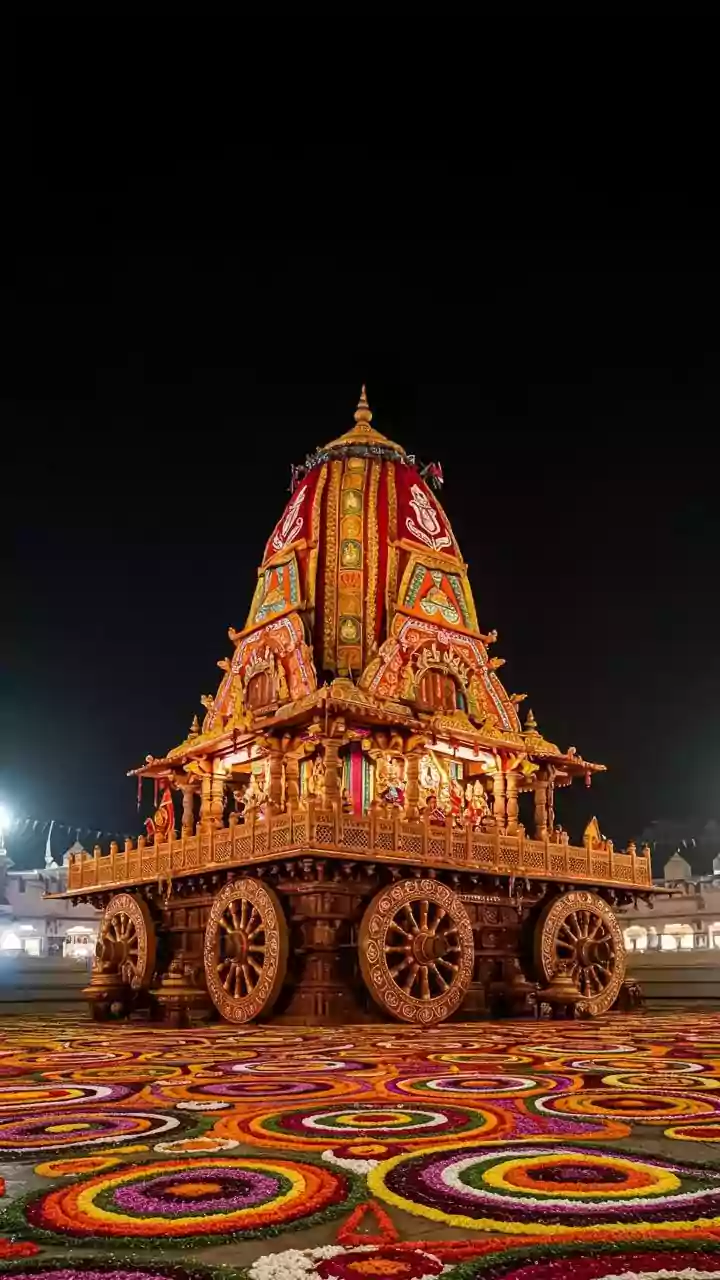
To understand the “energy” of Rath Yatra, you have to appreciate its scale. The three chariots are staggering structures, newly built each year by a dedicated team of artisans using traditional methods. The main chariot for Jagannath, named Nandighosha, stands about 45 feet tall, has 16 wheels, and is draped in vibrant red and yellow fabrics. It takes thousands of devotees, pulling on thick coconut fiber ropes, to move these massive structures through the grand avenue of Puri, known as the Bada Danda. In a typical year, more than a million people flood the city to witness the procession. The air crackles with the sound of gongs, cymbals, trumpets, and the unified chant of “Jai Jagannath!” (Victory to Jagannath). It is an overwhelming sensory experience, a physical manifestation of collective faith.
An Egalitarian Display
A core spiritual tenet of Rath Yatra is its egalitarianism. Within the temple walls, access can be restricted based on religion. But during Rath Yatra, the deities come out to see and be seen by everyone, regardless of caste, creed, or background. A touch of the chariot ropes is considered an incredibly pious act, a direct connection to the divine. This belief fuels the intense desire of the crowd to participate, creating a powerful, surging force that is both chaotic and deeply spiritual. The festival symbolizes a journey where the lord of the universe sets aside his temple-bound majesty to mingle with the common person, reinforcing a message of universal love and acceptance.
The Story Behind the Date
While the festival is annual, the headline's specific mention of June 23 likely refers to the year 2020. That year, Rath Yatra fell on that date under the shadow of the global pandemic. The event became a national focal point as the Supreme Court of India initially banned the festival to prevent the spread of COVID-19, only to reverse its decision at the last minute, allowing a tightly controlled procession with no public attendance. The sight of the massive chariots being pulled through empty streets by a few hundred designated priests and police—a stark contrast to the usual millions—created a different, but equally potent, kind of energy. It underscored the festival's deep cultural and spiritual importance, deemed essential enough to proceed even under the most extraordinary circumstances.