
The Great Kitchen Migration
Remember when the coffee shop was the “third place”—that essential social hub between home and work? For millions of Americans, the lines have blurred. The rise of remote and hybrid work didn't just empty out office buildings; it fundamentally rewired
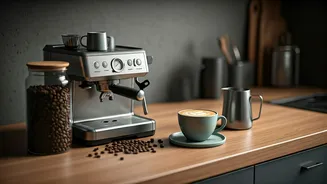
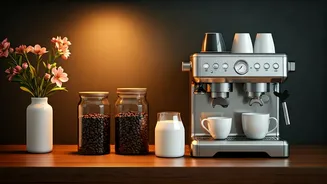
our daily routines. The morning commute that once included a stop for a $7 latte now begins with a short walk to the kitchen. This shift has transformed the home from a place of simple consumption to one of active creation. Suddenly, the kitchen counter isn't just for a toaster and a drip machine. It’s a potential coffee bar, a place for experimentation and a small, daily moment of affordable luxury. The demand for a quality caffeine fix didn’t disappear with office life—it simply moved house, bringing the expectations of café-quality flavor and texture along with it.
It's the Economy, Barista
Let’s do the math. A daily specialty coffee can easily run upwards of $5, or over $1,800 a year. For a two-coffee-drinker household, that figure doubles. Faced with inflation and a desire to control spending, many consumers are looking at that recurring expense and seeing an opportunity. The initial investment in a quality home espresso machine, which can range from a few hundred to a few thousand dollars, suddenly seems less like an indulgence and more like a savvy financial move. The payback period is surprisingly short. This economic calculation is a huge driver of the trend. People aren't just trying to replicate a drink; they're trying to replicate an experience without the recurring cost. It’s a conscious trade-off: a one-time splurge on equipment for long-term savings and unlimited access to their favorite drinks. Once that machine is on the counter, the marginal cost of a homemade latte is just the price of milk and beans, making a second or third cup an easy, guilt-free decision.
From Drip to Dialed-In
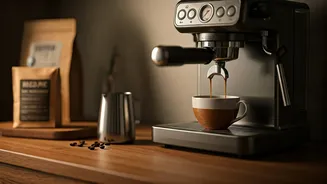
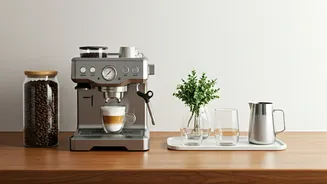
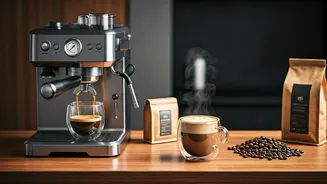
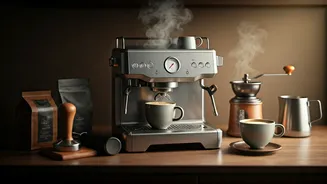
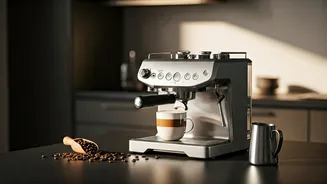
This home-brewing revolution wouldn’t be possible without a parallel revolution in consumer technology. For decades, “good” home coffee meant a programmable drip machine or, for the more adventurous, a French press. Espresso was the exclusive domain of cafés with their massive, complicated, and prohibitively expensive machines. Not anymore. Today’s market is flooded with user-friendly, aesthetically pleasing, and remarkably capable home espresso machines. Brands like Breville, De'Longhi, and a host of smaller challengers have democratized the process of pulling a decent shot. Integrated grinders, automatic milk frothers, and programmable settings take the guesswork out of what was once a highly technical skill. This accessibility has lowered the barrier to entry, empowering amateur enthusiasts to “dial in” their grind, perfect their tamping pressure, and steam milk into velvety microfoam—all before their first Zoom meeting of the day.
The TikTok-ification of Coffee
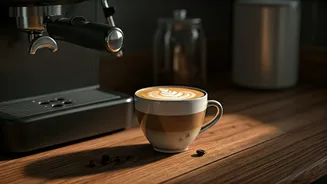
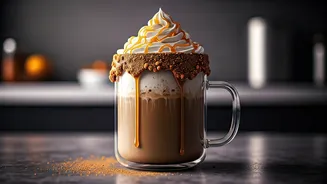
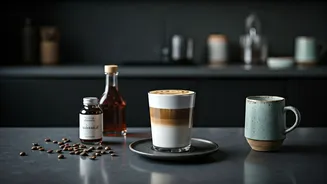
You can't talk about a modern home trend without talking about social media. The rise of the home barista is inextricably linked to platforms like TikTok and Instagram. It started with the viral Dalgona coffee craze during the early days of the pandemic and has since evolved into a full-blown subculture. Search for #CoffeeTok and you'll find an endless scroll of satisfying videos: a perfectly pulled shot of espresso cascading into a glass of iced milk, intricate latte art, and recipes for everything from a Brown Sugar Oatmilk Shaken Espresso to a Lavender Haze Latte. This has turned coffee making from a private morning chore into a public-facing hobby. It's a form of creative expression, a skill to be honed and shared. The aesthetics are just as important as the taste—the clear glass mugs, the neat coffee stations, the satisfying sounds of the process. It’s not just a drink; it’s content.
Beyond the Espresso Shot
While espresso is the star of the show, the trend is bigger than just one type of bean. The desire for barista-style drinks extends across the beverage spectrum. High-quality matcha has found a massive audience, with home connoisseurs whisking up vibrant green lattes using traditional bamboo whisks. Specialty tea brewing, with precise temperatures and steep times, is also gaining traction. Even cold brew has gone from a niche summer product to a year-round staple, with countless devices promising a smooth, low-acid concentrate made right in the fridge. This isn't just about replacing a morning coffee; it's about taking ownership of our entire beverage culture, from the energizing morning kick to the calming afternoon tea, and making it better, cheaper, and more personal.