



Stop Chasing 'Good Weather'
The first step to better travel planning is to redefine your goal. We’re culturally conditioned to believe “good weather” means sunny and 75 degrees. But does it have to? Instead of chasing an elusive, singular ideal, start by asking what kind of atmospheric
experience you actually want. Are you looking for the crisp, cool air of a mountain morning? The moody, romantic fog of a coastal town? The dramatic, photogenic power of an afternoon thunderstorm rolling across the plains? A trip to the Pacific Northwest in June might mean misty mornings and temperatures in the 60s—a nightmare for a sunbather, but a dream for a hiker who wants to explore lush, green forests without breaking a sweat. Acknowledging that different kinds of weather can be beautiful and enjoyable frees you from the tyranny of the perfect forecast and opens up a world of possibilities.
Know Your June Climate Zones
June is a transitional month, and the U.S. is a patchwork of wildly different climate realities. Thinking in broad regional strokes is crucial. The Southeast is often sliding into its humid, sticky, and thunderstorm-prone summer, with hurricane season officially underway. The Southwest is typically dry, but triple-digit heat becomes a real possibility, making mid-day activities difficult or dangerous. Conversely, the Northeast and the Upper Midwest are often hitting their sweet spot, with long, pleasant days and comfortable nights. The Mountain West offers warm days and cool nights, but be prepared for high-altitude sun intensity and the occasional late-spring snow flurry in the highest peaks. Understand these macro-patterns before you even start looking at specific cities. A Florida beach trip might sound classic, but a trip to a Michigan lake town might deliver a more reliably pleasant experience in June.
Master the Art of the Microclimate
Once you’ve picked a region, you need to zoom in. Microclimates can create stunning weather variations within a short distance. Nowhere is this truer than California, where in June you can leave foggy, 58-degree San Francisco and, after a two-hour drive inland, find yourself in 95-degree sunshine. The same principle applies elsewhere. Coastal areas are often cooler and breezier than their inland counterparts. Mountain valleys can be significantly warmer than the ridges above them. Before you book that charming rental, look at its exact location on a map. Is it right on the water? A few miles inland? At the base of a mountain or near the summit? A little geographical homework can save you from being chilly on your beach vacation or sweating through your mountain retreat.
Pack for Reality, Not Hope
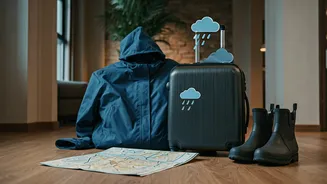
Your suitcase is your best defense against the whims of Mother Nature. The key to a weatherproof trip is versatile layering. Packing for a single, perfect forecast is a rookie mistake. Your packing list should always account for a 15-degree temperature swing and the possibility of wind or rain. A lightweight, packable waterproof shell is non-negotiable for almost any destination. A fleece or merino wool mid-layer can handle a sudden evening chill. Choosing fabrics that dry quickly (synthetics or wool) over cotton can be a game-changer if you get caught in a downpour. This isn’t about pessimism; it's about preparation. Being able to adapt to the weather you *get*, not the weather you *wanted*, ensures that a cool front or a passing shower is a minor inconvenience, not a trip-ruining disaster.
Use Smarter Tools and Data
Your phone's default weather app is great for the next 24 hours, but it’s not a strategic planning tool. To get a better sense of what a destination is *really* like in June, dig a little deeper. Use websites that provide historical weather data, allowing you to see the average highs, lows, and precipitation for your exact travel dates over the past 10 or 20 years. For a longer-range view, check out the monthly outlooks from NOAA’s Climate Prediction Center, which give you a sense of whether a region is expected to be warmer, cooler, wetter, or drier than average. This data-driven approach helps you set realistic expectations. If a city has seen rain on 15 out of 30 days every June for the last decade, you can plan for indoor activities and pack accordingly, turning potential frustration into a well-managed part of the journey.