





Nature's Ethereal Light Show
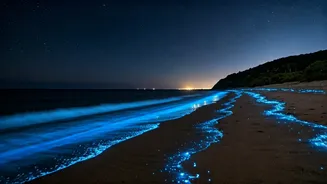
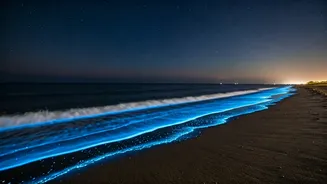
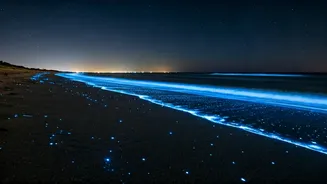
Along a serene stretch of India’s southwestern coast, the Arabian Sea holds a mesmerizing secret that reveals itself only after dark. Known as bioluminescence, or “sea sparkle,” this phenomenon transforms ordinary beaches into otherworldly landscapes.
As waves break or as you disturb the water with your hands or feet, countless tiny points of light flicker and swirl, creating shimmering trails of liquid blue light. The effect is profoundly magical, as if the stars have fallen from the sky and dissolved into the ocean. For visitors lucky enough to witness it, the experience feels less like a trip to the beach and more like stepping into a fantasy film.
A Tiny Spark with a Big Impact
So, what causes this incredible spectacle? The glow comes from a type of marine plankton called dinoflagellates, specifically a species named *Noctiluca scintillans*, which translates to “night light.” These single-celled organisms are normally invisible to the naked eye. However, when they are disturbed—by the motion of the waves, a swimming fish, or even a person’s footsteps in the wet sand—they emit a flash of light as a defense mechanism. This biochemical reaction is meant to startle predators, but for human observers, it creates an enchanting, interactive light show. When these organisms bloom in high concentrations, the effect is magnified, turning entire shorelines into a pulsating, glowing wonder.
Where to Find the Glowing Waves
This ethereal event isn't guaranteed every night, but it has been frequently reported along the coastal districts of Karnataka, particularly around Udupi and Mangalore. Beaches like Mattu Beach, Padukere Beach, and Tannirbhavi Beach have become hotspots for witnessing the phenomenon. Mattu Beach, a quiet strip of land between a river and the sea, is often cited as one of the most reliable spots. Its relative lack of light pollution makes the bioluminescent glow appear even more brilliant against the dark water. The key to seeing it is getting away from the bright lights of coastal towns, allowing your eyes to adjust to the darkness, and letting the ocean reveal its hidden light.
Chasing the Blue Sparkle
For American travelers dreaming of this experience, timing and patience are everything. The bioluminescence in Karnataka is most commonly spotted after the monsoon season, typically from late September through November, although sightings have occurred at other times of the year. It's an unpredictable event, dependent on water temperature, nutrient levels, and tidal conditions. There’s no official schedule or forecast; you simply have to be in the right place at the right time. Local fishermen and guesthouse owners are often the best source of information, as they notice when the “sea sparkle” has returned. Viewing it requires a bit of luck, but that's part of the appeal. It’s not a tourist attraction you can book, but a wild, fleeting moment of natural magic that makes the journey all the more rewarding.