








The New Space Race Is Commercial
The single biggest catalyst for this youth movement isn’t coming from a government agency, but from the private sector. Companies like SpaceX, Blue Origin, and Rocket Lab have fundamentally changed the public perception of space exploration. Where NASA’s
progress was once measured in decades, these commercial players launch, land, and relaunch rockets with a frequency that feels more like Silicon Valley than Cape Canaveral. The constant stream of spectacular booster landings and ambitious Starship prototypes has created a sense of tangible, rapid progress.
For students today, this translates into visibility and viability. They see billionaires like Elon Musk and Jeff Bezos pouring fortunes into their space-faring visions, creating a perception of a booming, well-funded industry with real job prospects. This “SpaceX effect” has made aerospace engineering and related fields feel less like a niche government path and more like a dynamic, high-growth tech sector. The excitement is infectious, turning what was once science fiction into a concrete career goal for high school and college students across the country.
NASA’s Artemis Generation
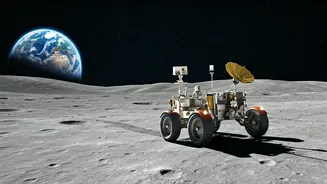
While private companies provide the sizzle, NASA provides the steak. The agency’s Artemis program, with its bold objective of returning humans to the Moon and eventually landing them on Mars, has given this new wave of interest a grand, unifying purpose. Unlike the Apollo program, which was a geopolitical sprint, Artemis is framed as a sustainable, long-term international collaboration to establish a permanent human presence off-world.
This provides a powerful narrative for young people. They are not just watching history; they are the “Artemis Generation,” with the potential to contribute directly to humanity’s next great leap. NASA has been strategic in its outreach, connecting the program to future careers in science, engineering, and technology. This high-profile government mission gives the entire sector an anchor, assuring students and their parents that the space industry is not just a commercial fad but a national priority with staying power and federal backing.
A Universe of Different Careers
Crucially, the definition of a “space job” has expanded far beyond the traditional image of an astronaut or a rocket scientist in a lab coat. The modern space industry needs a diverse array of skill sets, a fact that is widening its appeal to a broader range of students. The future of space exploration requires software engineers to write code for autonomous rovers, data scientists to analyze exoplanet discoveries from the James Webb Space Telescope, and materials scientists to invent new alloys for spacecraft.
But it doesn’t stop there. The growing space economy also needs botanists to figure out how to grow food on Mars, psychologists to study the effects of long-duration spaceflight, and even lawyers to draft treaties governing celestial bodies. This diversification means students passionate about almost any STEM field—and even some outside of it—can now see a plausible path to a career in space. University programs are adapting, offering interdisciplinary minors and specialized tracks that connect fields like agriculture, medicine, and computer science to aerospace applications.
Fueling the Talent Pipeline
The enthusiasm is backed by numbers. Universities with strong aerospace engineering programs are reporting surges in applications and enrollment. The U.S. Bureau of Labor Statistics projects that employment for aerospace engineers will grow faster than the average for all occupations through the next decade. This demand is creating a virtuous cycle: as more high-profile jobs appear, more students are drawn to the field, ensuring a robust talent pipeline for the future.
This groundswell of interest is a critical asset for the United States. Maintaining leadership in space—both for national security and economic competitiveness—depends entirely on attracting the best and brightest minds. The current excitement suggests that for the first time in a generation, the industry won’t have to search very hard to find them. They’re already looking up at the stars, charting their course.