





The Gap Between Forecast and Reality
You’ve seen the pictures: Arizona's desert floor carpeted in wildflowers after a summer storm, or Thailand’s rice paddies glowing a vibrant, impossible green. Traveling during a region’s rainy or “monsoon” season can be a breathtaking experience, offering
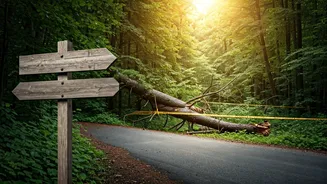
a perspective that fair-weather tourists miss entirely. It often comes with the added bonus of lower prices and thinner crowds. But this beauty is born from powerful, unpredictable weather that a national forecast on your phone simply can't capture. That app might tell you “70% chance of rain,” but it won’t tell you that the only road to your remote Airbnb is about to be submerged by a creek that swells from a trickle to a torrent in twenty minutes. It won't tell you that a sudden rockslide has closed the canyon trail you planned to hike, or that a lightning storm is shutting down the local chairlift. This is the critical information gap where amazing trips go wrong. Relying solely on generalized, big-picture weather data during monsoon season is like trying to navigate a city with a map of the entire country; you're missing the specific details that matter most.
Why Your National Weather App Fails
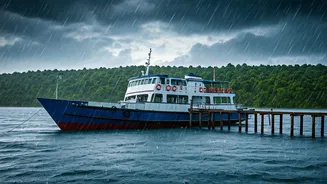
Most of us have a go-to weather app we trust. For everyday life, it’s a modern marvel. For monsoon travel, it's often a liability. These apps excel at regional patterns but struggle with the highly localized, fast-changing phenomena that define rainy seasons in mountainous or coastal areas. A single mountain can create its own weather system, with one valley getting drenched while the next remains sunny. A global app’s algorithm is unlikely to account for the specific topography that makes one stretch of highway a notorious flash flood zone while another, just a mile away, is perfectly safe. Furthermore, these apps report on weather, not its consequences. They predict rainfall totals but can’t report on a downed power line, a last-minute festival cancellation due to a waterlogged field, or a sudden beach closure because of dangerous surf. True travel readiness requires moving beyond the forecast and into the realm of on-the-ground conditions.
How to Tap Into the Local Intel Stream
So, where do you find this crucial, hyper-local information? It’s more accessible than you think. This isn't about ditching your plans; it’s about augmenting them with real-time intelligence. First, start with official sources. Before you even leave, identify the social media accounts for the local county sheriff, department of transportation, and national or state park services for your destination. These are the first places to post urgent updates on road closures and safety alerts. In the U.S. Southwest, for example, the National Park Service pages for places like Zion are indispensable for flash flood warnings. Second, tune into the community conversation. Search Facebook for town- or region-specific groups (e.g., “Moab Community Group” or “Kauai Visitors”). These forums are goldmines. Locals will post photos of a flooded crossing or ask if a certain road is passable long before an official alert goes out. It’s a real-time, crowd-sourced intelligence network. Finally, use your analog resources. When you arrive, talk to the person at your hotel’s front desk, your rental car agent, or the barista at the local coffee shop. Ask them simple questions: “Any roads we should avoid with the rain today?” or “Is the trail to the falls still safe?” These people live here. They know which bridge floods first and which scenic drive is best after a storm.
From Danger Aversion to Opportunity Seeker
This strategy isn’t just about avoiding disaster; it’s about unlocking opportunity. The same local channels that warn you of a washed-out road are the ones that will celebrate its reopening, often with spectacular views cleared by the rain. A local community group might post about a pop-up farmers market organized because of a break in the weather, or a brand-new waterfall that only appears after a heavy downpour. By monitoring local updates, you shift from being a passive victim of the weather to an active, informed traveler who can pivot. That closed trail might lead you to discover a fantastic local museum you would have otherwise skipped. A rainy morning might be the perfect excuse to visit that famous bakery you read about. The monsoon season is dynamic, and the best trips are the ones that embrace that fluidity. Having a direct line to local knowledge gives you the confidence to adapt your itinerary on the fly, turning a potential setback into an unforgettable part of your adventure.