



Dasheri: The King of Mangoes
If Lucknow has a signature mango, it’s the Dasheri. This is the variety that poets have rhapsodized about for centuries. Legend traces its lineage back to a single mother tree in the 18th century, located in the village of Dasheri, from which it takes
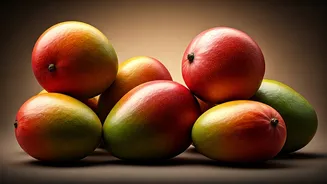
its name. Slender and elongated with a greenish-yellow skin, the Dasheri is not a mango you hack into cubes. It’s prized for its completely fiberless, buttery flesh that melts in your mouth. The flavor is intensely sweet, with a heady aroma and notes of honey and peach. For locals, the true way to enjoy it is to gently knead the fruit until the pulp liquefies inside, then snip off the top and drink the nectar directly. It’s an experience that redefines what a mango can be.
Chausa: The Late-Season Superstar
Just when you think mango season is winding down in late July and August, the Chausa makes its grand entrance. This mango is a lesson in patience and its reward. Named after a town in Bihar where it was famously promoted by the 16th-century ruler Sher Shah Suri, the Chausa is known for its incredible fragrance that can fill an entire room. It has a uniform, bright yellow skin when perfectly ripe and a characteristic shape with a soft “beak” at its end. The pulp is a deep, almost saffron-orange, with a uniquely rich, sugary sweetness that has very little acidity. It's incredibly juicy, making it another favorite for sucking the pulp straight from the skin—a messy but utterly blissful rite of summer.
Langra: The Tangy Contender
Don’t let its name, which translates to “lame” in Hindi, fool you. The Langra mango earned its moniker from the farmer who first cultivated it, but its flavor is anything but impaired. This variety is for those who appreciate a bit of complexity. Unlike the pure sweetness of the Dasheri or Chausa, the Langra has a delicious sweet-tart balance. It often retains a greenish hue even when fully ripe, a trait that can confuse newcomers. The flesh is fibrous near the seed but smooth otherwise, with a distinct resinous or turpentine-like note in its aroma that connoisseurs adore. It’s a mango with personality, offering a bright, citrusy finish that cuts through its own sweetness and leaves your palate refreshed.
Lucknowa: The Nawab's Delight
A lesser-known but historically significant variety, the Lucknowa is intertwined with the lavish lifestyle of the Nawabs, the former rulers of the region. These patrons of culture and cuisine cultivated sprawling mango orchards, or “baghs,” engaging in friendly competition to develop the most exquisite fruits. The Lucknowa is a testament to this legacy. It's a medium-sized mango, often with a delicate pale-yellow skin blushed with pink. Its flavor is considered more subtle and refined than its bolder cousins—sweet, but with floral undertones and a clean, non-cloying finish. It represents a more aristocratic and nuanced approach to sweetness, a perfect dessert fruit to be savored slowly.
More Than Just Fruit: The Mango Culture
In Lucknow and across Northern India, mangoes are not just a food item; they are a cultural phenomenon. The arrival of the first crop is a celebrated event. Families host “mango parties,” where guests gather to feast on baskets of chilled mangoes. Gifting a box of the season’s best Dasheris is a gesture of great respect and affection. The fruit is a thread woven into the fabric of social life, symbolizing hospitality, generosity, and the pure joy of summer. It’s an obsession that unites everyone, from street vendors to wealthy industrialists, in a shared appreciation for this fleeting, golden season.