








The Bollywood Effect
If you want to understand any trend in India, a good place to start is Bollywood. And when it comes to Pilates, the film industry isn't just following a trend—it's creating it. For years, the go-to celebrity workout was all about high-intensity gym sessions
aimed at building visible muscle. Today, the conversation has shifted. The new fitness ideal, championed by A-list stars like Deepika Padukone, Alia Bhatt, and Katrina Kaif, is one of lean strength, flexibility, and impeccable posture. Their social media feeds, once filled with clanging weights, are now dotted with images of them in gravity-defying poses on the Pilates Reformer. This is no accident. They are often training with a small, elite group of celebrity instructors, most notably Yasmin Karachiwala and Namrata Purohit. These two women have become fitness gurus in their own right, turning their Pilates studios into exclusive hubs for the rich and famous. When a star credits their toned physique not to endless crunches but to the core-strengthening discipline of Pilates, millions of their followers take notice. The workout is instantly reframed as aspirational, sophisticated, and the secret to a movie-star body.
More Than a Six-Pack
While the aesthetic appeal is undeniable, the Mumbai Pilates boom is about more than just looking good. It represents a broader shift in wellness philosophy. For a growing segment of the city's affluent and educated population, the old model of 'no pain, no gain' is being replaced by a desire for smarter, more sustainable fitness. Pilates fits this new mindset perfectly. It’s a low-impact workout that emphasizes control, precision, and alignment. This appeals to a clientele that is often dealing with the stresses of a desk job and the physical toll of long commutes in a bustling metropolis. Trainers report clients coming in not just to 'get abs' but to fix their posture, alleviate back pain, and build functional strength that serves them in daily life. Unlike a punishing CrossFit session, a Pilates class is seen as a form of mindful movement—an hour dedicated to reconnecting with one’s body. This holistic approach, which links physical exertion with mental focus, is a powerful draw in a culture that has long valued practices like yoga.
The New Status Symbol
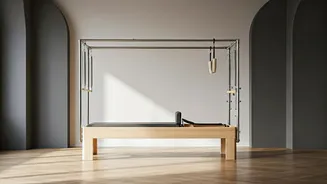
Let’s be clear: Pilates in Mumbai is not a grassroots phenomenon. It is, for now, an exclusive and expensive pursuit. A session at a top-tier studio can cost a significant sum, placing it firmly in the realm of luxury services. A Pilates class has become a new kind of status symbol, much like a SoulCycle membership in New York or an Erewhon smoothie in Los Angeles. It signals that you are not only wealthy but also invested in a modern, globalized vision of health and wellness. The studios themselves reflect this, often located in upscale neighborhoods like Bandra and Juhu. They are meticulously designed spaces—bright, minimalist, and highly Instagrammable. Attending a class is not just a workout; it’s a social experience. You’re exercising alongside the city’s movers and shakers, creating an unspoken network of influence and shared lifestyle choices. For many, being able to say you do Pilates is a way of announcing your membership in a certain cosmopolitan tribe.
An Urban Sanctuary
Finally, to truly understand the appeal, you have to understand Mumbai itself. It is a city of relentless energy, noise, and density. Finding a moment of peace can be a daily struggle. A Pilates studio, therefore, offers more than just exercise; it offers refuge. It is a controlled environment, an oasis of calm carved out of the urban jungle. The focus required by the discipline—the concentration on breath, the precise muscle engagement—forces practitioners to leave the chaos of the city outside the door. For one hour, the endless demands of work, family, and social life fade into the background. This psychological benefit may be just as important as the physical one. In a city that never stops, the slow, deliberate movements of Pilates provide a much-needed counterbalance, proving that sometimes the most powerful changes come not from adding more, but from finding focus within.