




Ignoring the Risk of Hydroplaning
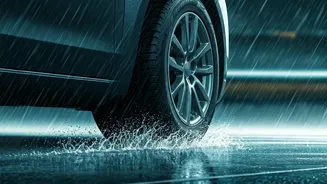
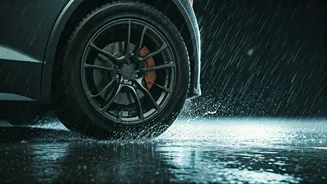
That feeling of your car momentarily floating or skidding on a wet surface is hydroplaning. It happens when your tires can't channel water away fast enough, causing them to lose contact with the road. Many drivers think it only happens at highway speeds,
but it can occur at speeds as low as 35 mph with worn tires or deep enough water. Constant hydroplaning, even for a split second, puts immense stress on your tires, accelerating wear and tear. More importantly, it’s a massive safety risk. The habit isn't just driving fast; it’s failing to adjust your speed to the conditions. Slowing down gives your tire treads the time they need to grip the pavement, maintaining control and preventing both accidents and unnecessary tire strain.
Powering Through Puddles and Potholes
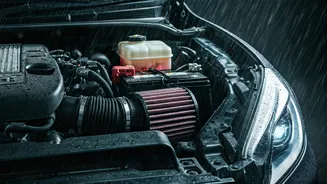
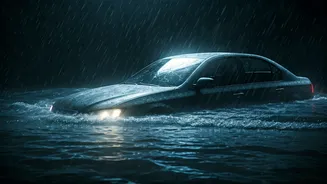
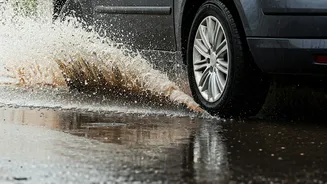
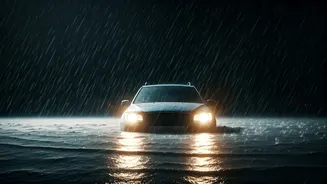
It can be tempting to make a big splash, but driving through standing water of an unknown depth is one of the riskiest things you can do. That seemingly shallow puddle could be hiding a deep, sharp-edged pothole capable of bending a wheel rim, blowing out a tire, or knocking your car's alignment out of whack. Even worse, plowing through deep water at speed can force a massive amount of water into your engine's air intake. This can lead to “hydrolock,” a catastrophic failure where the engine’s internal components are destroyed by trying to compress water instead of air. A new engine can cost thousands of dollars. The safe play is always to slow down and, if possible, drive around any significant accumulation of water on the road.
Using Cruise Control in the Rain
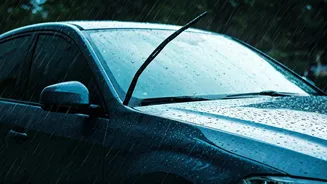
Cruise control is a fantastic feature for long, dry highway drives. In the rain, however, it becomes a liability. The system is designed to maintain a constant speed, and it doesn't have the situational awareness to know when conditions are slippery. If your car begins to hydroplane while cruise control is engaged, the system will keep trying to accelerate to maintain its set speed. This can cause the wheels to spin faster, worsening the skid and making it much harder for you to regain control. It’s a simple rule: if your windshield wipers are on, your cruise control should be off. Manually controlling your speed allows you to react instantly to changing road feel and prevent a minor slip from becoming a major spin-out.
Following Too Closely
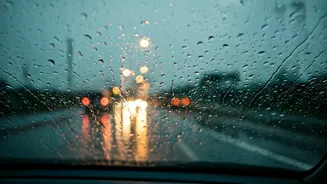
Tailgating is always a bad idea, but it’s exceptionally dangerous and damaging on wet roads. Your vehicle's stopping distance can double or even triple in rainy conditions. Following the car ahead too closely doesn't give you enough room to brake safely, dramatically increasing your risk of a collision. Beyond the obvious safety hazard, it also subjects your car to a constant barrage of debris. The tires of the car in front of you are like tiny water cannons, blasting a high-pressure mix of water, grit, sand, and road grime directly at your car's front end. This sandblasting effect can chip your paint, pit your windshield, and damage your headlights over time. Increase your following distance to at least four or five seconds to protect both yourself and your car's finish.
Neglecting Your Tires and Brakes
The most damaging wet-road habit might be the one you practice before you even start the engine: neglect. Your tires are your only connection to the road. Driving on bald or underinflated tires is a recipe for disaster in the rain, as they lack the tread depth needed to channel water effectively. Similarly, your brakes work differently when they're wet. Water can create a temporary layer between the brake pad and the rotor, reducing initial stopping power. While most modern brakes recover quickly, repeated hard braking on wet, gritty roads can accelerate wear on pads and rotors. Before the rainy season starts, it’s crucial to check your tire tread depth (the classic penny test works) and ensure your brakes are in good working order. It’s the cheapest insurance you can buy against wet-weather trouble.