





The New Gold Rush Isn't About Greed
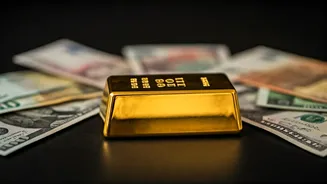
In the last two years, central banks have bought over 2,000 metric tons of gold, a level of accumulation not seen since the 1960s. This isn't about speculation; it's about security. For decades, the U.S. dollar has been the world’s undisputed reserve
currency. Nations held dollars to trade, pay debts, and stabilize their own economies. But a perfect storm of factors is shaking that confidence. High inflation has eroded the dollar's value, and aggressive interest rate hikes by the U.S. Federal Reserve have created economic pain abroad. Most critically, the use of financial sanctions against Russia, including freezing its dollar-denominated assets, sent a chilling message to the world: your reserves are only safe as long as you remain in Washington's good graces. In response, countries are hedging their bets. Gold, an asset with no counterparty risk and a history stretching back millennia, looks like the most reliable insurance policy available.
Who Are the Biggest Buyers?
The list of major buyers reads like a roll call of nations seeking greater economic independence from the West. The People’s Bank of China has been the most significant purchaser, steadily adding to its reserves for over a year straight. This move is a clear part of Beijing’s long-term strategy to reduce its reliance on the U.S. dollar and bolster the international standing of its own currency, the yuan. Other notable buyers include Turkey, Poland, and Singapore. For a country like Poland, which sits on NATO's eastern flank bordering Ukraine, bolstering its gold reserves is a powerful signal of economic sovereignty and stability in a volatile region. These aren't just minor portfolio adjustments. They represent a coordinated, if unspoken, move by a diverse group of nations to build a financial system that is less dependent on a single currency and a single geopolitical power.
Why Is India Just 'Watching'?
India’s position is uniquely complex. As the world’s fastest-growing major economy, it has every reason to join the gold-buying spree. The Reserve Bank of India (RBI) has indeed been a consistent, albeit modest, buyer. But the real story of gold in India isn't in its central bank vaults; it’s in the households of its 1.4 billion citizens. Indians have a profound cultural and financial attachment to gold, holding an estimated 25,000 metric tons of it privately—more than the official reserves of the United States, Germany, and Italy combined. This massive private stockpile acts as a de facto national reserve, providing a buffer against economic shocks. The RBI, therefore, can afford to be more measured. It continues to diversify its reserves, but it doesn't need to make the dramatic, headline-grabbing purchases of China. Instead, it’s playing a long game, slowly increasing its holdings while the nation’s citizens provide an unparalleled foundation of financial security.
A Challenge to the Dollar?
So, is this the end of the dollar's reign? Not so fast. The U.S. dollar remains the dominant currency for global trade, and there is no viable alternative ready to take its place. The global financial system is built on dollar-denominated plumbing that can't be replaced overnight. However, this gold-buying trend is the most significant symptom yet of a move toward a more 'multipolar' currency world. Rather than a single dominant currency, we may be heading toward a system where the dollar, the euro, the yuan, and tangible assets like gold coexist as major reserve holdings. For the United States, this 'de-dollarization' movement means the 'exorbitant privilege' of being the world's banker may slowly fade. The U.S. could find it more expensive to finance its debt and project its power. This isn't a sudden crisis but a slow, tectonic shift in global power, measured in metric tons of gold.