




The Zardalu: A Perfumed Treasure
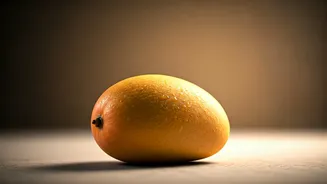
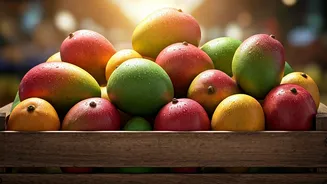
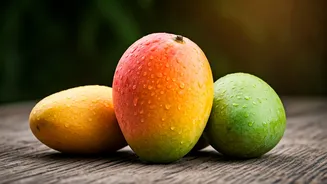
If you could bottle the scent of a perfect summer evening, it might smell something like a Zardalu mango. Hailing from the Bhagalpur district of Bihar in eastern India, this mango is famous less for its size and more for its intoxicating aroma. The name
'Zardalu' comes from the Persian word 'zard,' meaning yellow, a nod to its beautiful, uniform golden skin when ripe. Unlike the often-fibrous mangoes we get stateside, the Zardalu offers a completely smooth, buttery pulp. The flavor is exceptionally sweet but not one-dimensional; it carries distinct honeyed notes with a fragrant, almost floral finish. It’s so prized that it was granted a Geographical Indication (GI) tag, a status similar to Champagne in France, ensuring that only mangoes from this specific region can carry the name. The hype around the Zardalu is about its multi-sensory experience—it’s a mango you smell long before you taste it.
The Himsagar: The King of Creaminess
For true mango purists, the Himsagar is often whispered about in hushed, reverent tones. This medium-sized, greenish-yellow fruit from West Bengal and parts of Bangladesh is the embodiment of pure, unadulterated mango essence. Its defining characteristic is its texture: absolutely, unequivocally fiber-free. Cutting into a Himsagar reveals a deep saffron-colored pulp that is so creamy and dense it feels more like a decadent custard than a fruit. The flavor profile is a perfect balance of sweetness and a rich, complex muskiness that lingers on the palate. There’s no acidic tang, no stringiness—just smooth, velvety bliss. The Himsagar has a notoriously short season and doesn't travel particularly well, which only adds to its mystique and local adoration. Eating one is less like having a snack and more like indulging in a gourmet dessert, explaining why those who know it consider it the gold standard.
The Banganapalli: A Crowd-Pleasing Giant
If the Zardalu is perfumed and the Himsagar is creamy, the Banganapalli is the regal, satisfying heavyweight champion. Also known by its GI-protected name, Banganapalle, this mango from Andhra Pradesh is immediately recognizable by its large, oblong shape and vibrant, unblemished yellow skin. It’s a mango built to be shared. The Banganapalli has a uniquely thin and easy-to-peel skin, revealing a firm, fiberless flesh that’s both sweet and pleasantly tangy. This hint of acidity makes it incredibly refreshing and prevents the flavor from being overwhelmingly sugary. It’s the perfect all-rounder: delicious eaten fresh, sturdy enough to hold its shape in fruit salads, and fantastic in smoothies and desserts. Its lower moisture content gives its pulp a satisfying, almost meaty quality. While many mangoes are defined by a single, dominant characteristic, the Banganapalli’s hype comes from its flawless combination of size, balanced flavor, and perfect texture.