





It’s a Living Monastery, Not a Museum
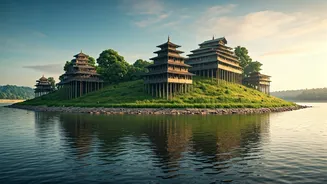
The heart of Majuli's cultural life beats within its *Sattras*. Forget what you know about silent, solemn monasteries. These unique neo-Vaishnavite institutions, founded in the 15th century, are vibrant hubs of art, music, and philosophy. They are living
cultural centers where monks (bhakats) dedicate their lives to practicing traditional dance-dramas (Bhaona), devotional songs (borgeet), and intricate craftsmanships. For a creative soul, visiting a Sattra isn't a passive experience. It's an immersion into a centuries-old artistic ecosystem that’s still thriving, offering a rare glimpse into a world where devotion and creativity are one and the same. You can witness mesmerizing performances, see ancient manuscripts, and feel the energy of a community built around art.
The Theatrical Art of the Mask-Makers
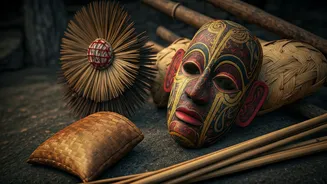
Nowhere is Majuli's artistic spirit more tangible than at the Samaguri Sattra. Here, artisans practice a breathtaking form of mask-making that has been passed down for generations. These aren't just static decorative objects; they are complex, life-sized character masks used in theatrical religious performances. Made from bamboo, clay, and cloth, the masks can depict gods, demons, and animals with incredible detail and expression. Some even have moving jaws and eyebrows, allowing performers to convey a wide range of emotions. Watching a master artisan like Dr. Hem Chandra Goswami at work is a profound experience. You see how raw, natural materials are transformed into avatars of myth and legend. For any artist, designer, or theater lover, this is a masterclass in storytelling through craft.
Villages Built on Handwoven Traditions
Majuli is home to diverse ethnic communities, most notably the Mishing tribe, who live in picturesque stilt houses to adapt to the river's seasonal flooding. Their villages are not just settlements; they are galleries of functional art. Almost every Mishing home has a handloom, where women weave incredible textiles with vibrant colors and geometric patterns. These fabrics, used for everything from traditional garments to household goods, are a testament to an artistic heritage that is deeply integrated into the domestic sphere. Travellers can wander through these serene villages, observing the rhythmic clatter of the looms and buying textiles directly from the weavers. It’s a sustainable, personal exchange that stands in stark contrast to mass-produced souvenirs.
Pottery Crafted Without a Wheel
In a world obsessed with technology, Majuli offers a look at an art form that is beautifully, stubbornly analog. In some parts of the island, potters—exclusively women—practice a unique form of pottery that requires no wheel. They shape the clay entirely by hand, using a tapping and shaping technique that seems almost magical in its simplicity. The pots, made from rich riverbed clay and fired in makeshift ground-level kilns, are rustic, earthy, and perfectly imperfect. This ancient, sustainable practice connects the potters directly to the land and the river that defines their home. Witnessing this process is a powerful reminder that sometimes the most sophisticated tools are a pair of skilled hands and a deep understanding of natural materials.
A Landscape That Inspires (and Disappears)
Beyond the specific crafts, the island's very atmosphere is a draw for the artistically inclined. Majuli is a place of minimalist beauty: vast expanses of emerald-green rice paddies, serene wetlands teeming with birdlife, and a sky that stretches uninterrupted to the horizon. The pace of life is slow, dictated by the seasons and the rhythm of the mighty Brahmaputra River. However, this beauty is fragile. The same river that created Majuli is now slowly eroding it. This constant threat of disappearance adds a poignant urgency to a visit. It’s a landscape that encourages reflection on nature, time, and impermanence—themes that have fueled artists for centuries. Visiting feels less like a vacation and more like bearing witness to a precious, fleeting world.