






An Icon Woven into History
Before it was officially named the national fruit of India, the mango was already royalty. Native to the subcontinent for millennia, its significance is etched into the country's very fabric. Ancient Sanskrit texts celebrate it, Hindu religious motifs
feature its leaves and fruit as symbols of love and fertility, and even the Buddha was said to have been gifted a mango grove to rest in. This isn't just a popular fruit; it's a foundational piece of cultural heritage. For over a billion people, the mango isn't something you simply eat; it's something you experience, an edible link to a shared and celebrated past.
The Royal Court of Mangoes
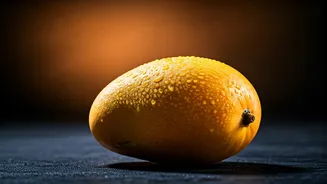
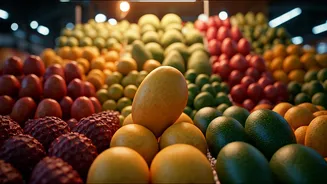
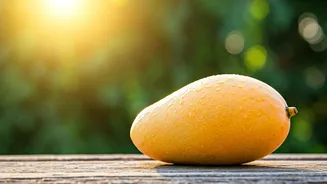
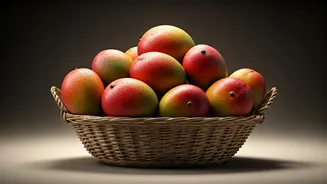
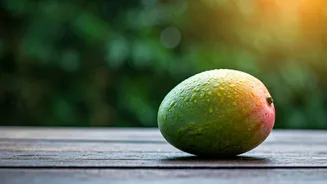
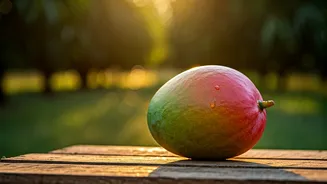
To say “mango” in India is like saying “wine” in France—it’s just the beginning of the conversation. The country is home to hundreds, if not thousands, of varieties, each with its own distinct flavor profile, texture, and loyal following. The undisputed king is the Alphonso, or 'Hapus,' a non-fibrous, saffron-hued variety from the western coast known for its intense sweetness and creamy texture. Its arrival is a national event. But other regions champion their own royalty: the fragrant, 'saffron' Kesar from Gujarat; the incredibly sweet and aromatic Dasheri from the north; the uniquely shaped 'parrot beak' Totapuri from the south. Each variety has its own terroir, its own story, and its own fiercely devoted fan base, creating regional rivalries as passionate as any sports debate.
The Sweet Rush of Summer
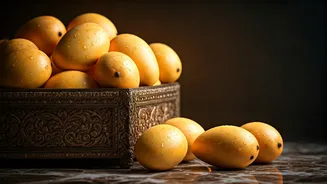
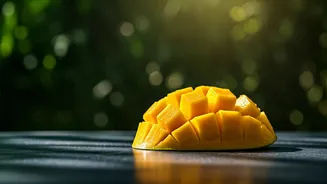
The Indian mango season is short, frantic, and glorious, lasting roughly from April to July. This scarcity fuels a nationwide frenzy. The first mangoes of the season are treated with reverence. Families have specific vendors they have trusted for generations. The purchase is rarely by the piece; it’s by the dozen or, more commonly, the crate. These crates are then central to family rituals—some are eaten immediately, others are sent to relatives in other cities as a token of love, and some are painstakingly processed into pickles, chutneys, and juices to preserve the taste of summer for the months to come. The act of eating a mango is itself a ritual, often a messy, hands-on affair where juice running down your chin is a badge of honor.
A Tool of Global Diplomacy
The mango's power extends far beyond India's borders. Mughal emperors, particularly Akbar the Great, were so enamored with the fruit that they planted legendary orchards of over 100,000 trees. In the modern era, this reverence has transformed into a unique form of international relations known as "mango diplomacy." For decades, strict U.S. regulations barred the import of fresh Indian mangoes. The lifting of this ban in 2007, after years of negotiation that involved India opening its markets to American Harley-Davidson motorcycles, was hailed as a major diplomatic breakthrough. Since then, annual shipments of Alphonso and Kesar mangoes to the U.S. have become a delicious symbol of the strengthening ties between the two nations, giving Americans a literal taste of Indian culture.