






So, What Is It, Really?
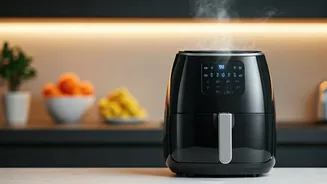
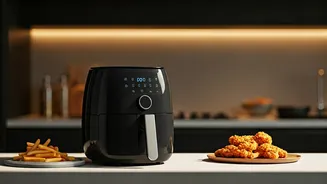
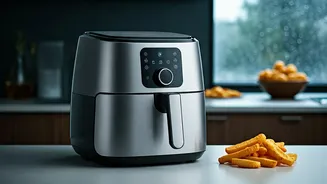
Let’s get the technicals out of the way. Despite the magical name, an air fryer doesn’t actually fry. There’s no vat of bubbling oil. At its heart, an air fryer is a small, high-powered convection oven. It uses a heating element and a powerful fan to
circulate hot air at high speed, creating a crisp, brown exterior on food that mimics the results of deep-frying, but with far less oil. The concept itself isn't new; convection technology has been used in commercial ovens for decades. But the masterstroke was packaging it in a compact, countertop-friendly, and slightly futuristic-looking pod. Philips pioneered the first commercially successful home air fryer in 2010, but for years it remained a pricey gadget for early adopters. Its true genius wasn’t the technology itself, but the marketing: it promised the joy of fried food without the guilt, and that was a message America was ready to hear.
The Pandemic-Fueled Phenomenon
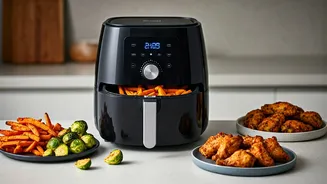
While air fryers were steadily gaining traction, the COVID-19 pandemic was the rocket fuel that sent them into the stratosphere. Confined to our homes, we became a nation of amateur chefs, sourdough starters, and banana bread bakers. But fatigue quickly set in. We wanted meals that were fast, easy, and offered a break from the monotony. The air fryer was the perfect solution. It required minimal preheating, cooked food incredibly quickly, and was ridiculously easy to clean compared to a greasy stovetop. Social media did the rest. TikTok and Instagram feeds filled with hypnotic videos of impossibly crispy chicken wings, perfectly roasted Brussels sprouts, and even air-fried Oreos. These weren't complicated recipes; they were simple, visual proof that you could achieve restaurant-quality crispiness in 15 minutes with minimal effort. According to market research firm NPD Group, air fryer sales surged by over 75% in 2020 alone, cementing the device as the defining kitchen appliance of the lockdown era.
The 'Healthy-ish' Holy Grail
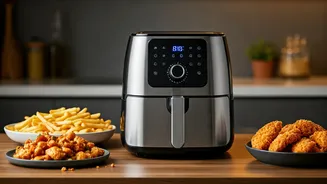
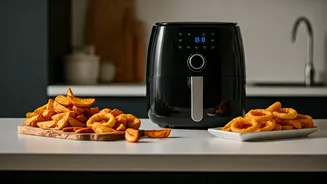
The air fryer’s mainstream appeal lies in its brilliant psychological positioning. It sits at the intersection of two powerful American desires: our love for indulgent, crispy food and our perpetual anxiety about health. The air fryer doesn't turn broccoli into a donut, but it allows us to enjoy foods we associate with junk—like French fries and chicken nuggets—with a significantly reduced amount of fat and calories. It’s the ultimate ‘healthy-ish’ compromise. This appliance gives us permission to indulge, reframing a plate of fries not as a guilty pleasure but as a smarter choice. For busy parents, it’s a way to get kids to eat their vegetables (if they’re crispy) or to whip up a quick dinner that isn't from a drive-thru. It solves a modern dietary paradox, delivering the comforting crunch we crave without the full weight of dietary regret.
Beyond the Countertop
The surest sign that a trend has gone mainstream is when big business co-opts it. And that's exactly what's happening with air frying. Walk down the frozen food aisle and you'll find a dizzying array of products explicitly designed for the appliance, with packaging that screams 'Air Fryer Ready!' or includes specific air fryer instructions. Brands like Tyson, Ore-Ida, and Gorton’s are all in. Fast-food chains have also jumped on the bandwagon, using 'air-fried' as a marketing buzzword to signal a healthier option, even if their industrial cooking methods are just large-scale convection. The term itself has become a powerful shorthand for 'crispy and maybe not so bad for you.' It’s no longer just a noun for an appliance; it’s an adjective, a verb, and a marketing strategy all rolled into one.