


Sourav Ganguly: The Prince Fights Back
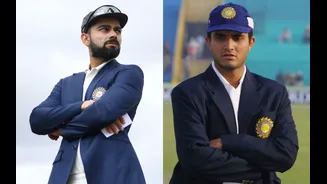
Imagine being the captain who transformed your national team from talented underachievers into a fierce, world-beating force. That was Sourav Ganguly. Then, imagine being unceremoniously dumped from that same team. In 2005, following a very public fallout
with coach Greg Chappell and a dramatic loss of form, the “Prince of Kolkata” was stripped of his captaincy and then his place on the squad. For many, it looked like the end of a glorious career. The media wrote his obituary, and critics declared him finished. But Ganguly refused to fade away. He went back to domestic cricket, grinding out runs away from the international spotlight. His persistence paid off. Recalled to the team in late 2006 for a tour of South Africa, a place notoriously difficult for batsmen, he emerged as India's highest run-scorer. The real fairytale moment came in 2007 when he scored his first-ever double century in Test cricket, cementing one of the most defiant comebacks in the sport's history.
Yuvraj Singh: The Ultimate Battle
Yuvraj Singh’s story transcends sport. In 2011, he was on top of the world, named Player of the Tournament after leading India to a historic World Cup victory on home soil. He was hitting sixes at will, taking crucial wickets, and playing through what he thought was just pain and breathlessness. Months later, the diagnosis came: a rare form of cancer, a seminoma lung tumor. His career, and indeed his life, was in jeopardy. The brash, big-hitting superstar was suddenly fighting a very different, very private battle. He underwent grueling chemotherapy in the United States, documenting his struggle and inspiring millions. Most athletes would have retired. But Yuvraj was determined to wear the Indian jersey again. Against all odds, he did. He returned to the Indian T20 side in September 2012. While his form fluctuated, his presence alone was a monumental victory. His personal peak came years later, in 2017, when he smashed his highest-ever ODI score of 150, a testament to a spirit that simply refused to be broken.
Virat Kohli: The King's Slump and Rise
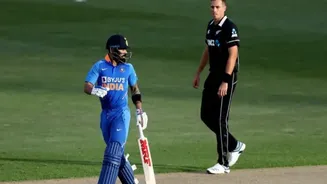
For the better part of a decade, Virat Kohli wasn't just a cricketer; he was a phenomenon. A run-scoring machine who made batting look impossibly easy, breaking records set by legends. Then, suddenly, the machine stopped. From late 2019 through mid-2022, Kohli endured a prolonged slump that was shocking for its severity. The centuries dried up, the confident swagger was replaced by frustrated sighs, and he relinquished the captaincy across all formats. For over 1,000 days, the man who scored centuries for fun couldn't buy one. Analysts dissected his technique, and pundits questioned if his best days were behind him. But after a short break to focus on his mental health, Kohli returned with a vengeance. The turning point was a blistering century in the 2022 Asia Cup. He followed it with a divine innings against Pakistan in the T20 World Cup, an unbeaten 82 that is already considered one of the greatest innings in the format's history. He was back, not just scoring runs, but dominating games like only he could.
Jasprit Bumrah: Rebuilding the Unorthodox
When a fast bowler has a unique, unconventional action like Jasprit Bumrah, their biggest asset is also their biggest risk. For years, his sling-shot action generated incredible pace and wicked movement, making him one of the most feared bowlers in the world. But in 2022, the inevitable happened: a major back stress fracture. For a fast bowler, a back injury is the ultimate nightmare. He missed the T20 World Cup and was sidelined for nearly a year. Whispers grew about whether his unorthodox body could sustain the pressures of top-flight cricket. Would he have to change his action? Would he ever be the same bowler? Bumrah answered those questions emphatically. After extensive rehabilitation, he returned in mid-2023, looking sharper and faster than ever. He led India's bowling attack with venomous precision in the 2023 ODI World Cup, reminding everyone why he is a generational talent. His comeback wasn't just a return to the team; it was a reassertion of his dominance, proving that his unique mechanics, when managed correctly, were a sustainable gift.