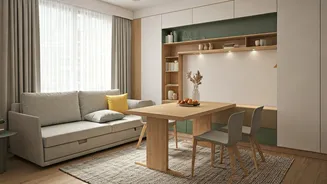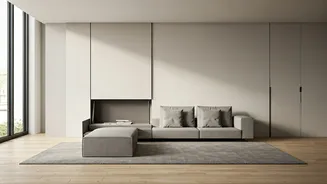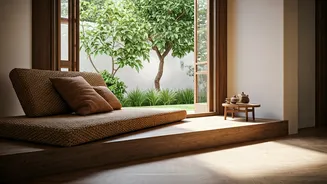


The New 'Indian Modern' Aesthetic
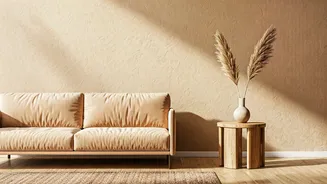
Step inside a design-forward home in Mumbai, Bangalore, or Delhi today, and you might be surprised by what you don't see: no stark, white-box minimalism, no over-the-top ornamentation. Instead, you'll find a sophisticated blend of texture and warmth.
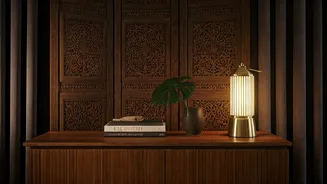
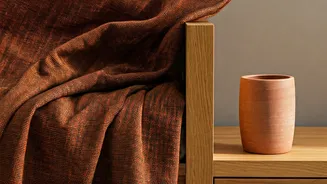
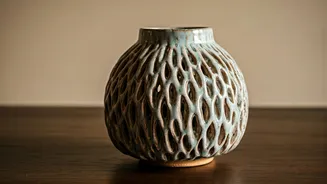
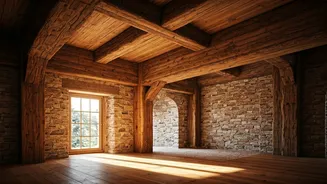
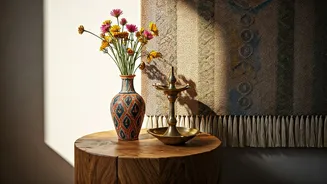
This emerging style, often dubbed 'Indian Modern,' is built on a foundation of honest, natural materials. Think walls of exposed brick, floors of polished Kota stone, and furniture crafted from rich, local woods like teak and sheesham. The look is clean and contemporary in its lines but ancient and soulful in its palette. It’s a design language that speaks of permanence and calm in the heart of some of the world's most bustling cities. The focus isn't on flawless polish but on character—the grain of wood, the cool, uneven surface of stone, the subtle imperfections that make a space feel alive and lived-in.
Rooted in Tradition, Reimagined
This trend isn't about recreating the past; it's about reinterpreting it for the 21st century. For generations, Indian architecture has used these very materials for their durability and climate suitability. Stone floors have always helped keep interiors cool, while central courtyards (or 'aangans') often featured brick and wood. Today’s architects and designers are tapping into this deep cultural memory. They are using local materials not just out of nostalgia, but because they inherently belong to the landscape. A slab of Jaisalmer yellow marble or a partition made from reclaimed timber from an old haveli tells a story. It connects a sleek, urban apartment to a broader history and a specific sense of place. This approach provides a powerful antidote to the generic, globalized aesthetic that has dominated design for decades, creating homes that feel uniquely and authentically Indian.
The Global Craving for Authenticity
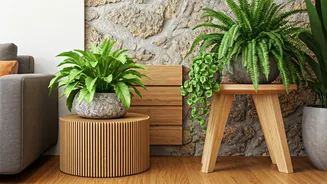
While the expression is distinctly Indian, the impulse behind it is global. This movement is part of the larger trend of biophilic design—the idea that humans have an innate need to connect with nature. After years spent staring at screens, we crave tactile, sensory experiences. The feel of a rough-hewn wooden table, the cool touch of a stone countertop, the visual depth of a brick wall—these things ground us. They engage our senses in a way that flat-pack furniture and laminate surfaces cannot. In the U.S., we see this in the popularity of rustic-modern farmhouse design and the obsession with reclaimed wood. In India, this same desire is being filtered through a different cultural and material lens, resulting in a style that feels both familiar in its intent and excitingly new in its execution. It’s a universal search for a home that feels less like a product and more like a sanctuary.
Sustainability as a Quiet Statement
There's also a strong undercurrent of sustainability driving this trend. Choosing locally sourced stone and timber drastically reduces a project's carbon footprint compared to importing materials from across the world. Many designers are going a step further, championing the use of reclaimed wood and salvaged architectural elements. This not only prevents waste but also imbues a new space with the character and history of the old materials. In a country experiencing rapid development and environmental challenges, this conscious choice becomes a quiet form of activism. It’s a statement that luxury doesn't have to mean extravagance or waste. Instead, true luxury can be found in thoughtful, responsible design that honors both the planet and cultural heritage.